
Gravure vs Digital Printing for Shrink Sleeves
How run length, version count, and turnaround decide between rotogravure and digital printing for shrink sleeves — and what the choice means for the film underneath.
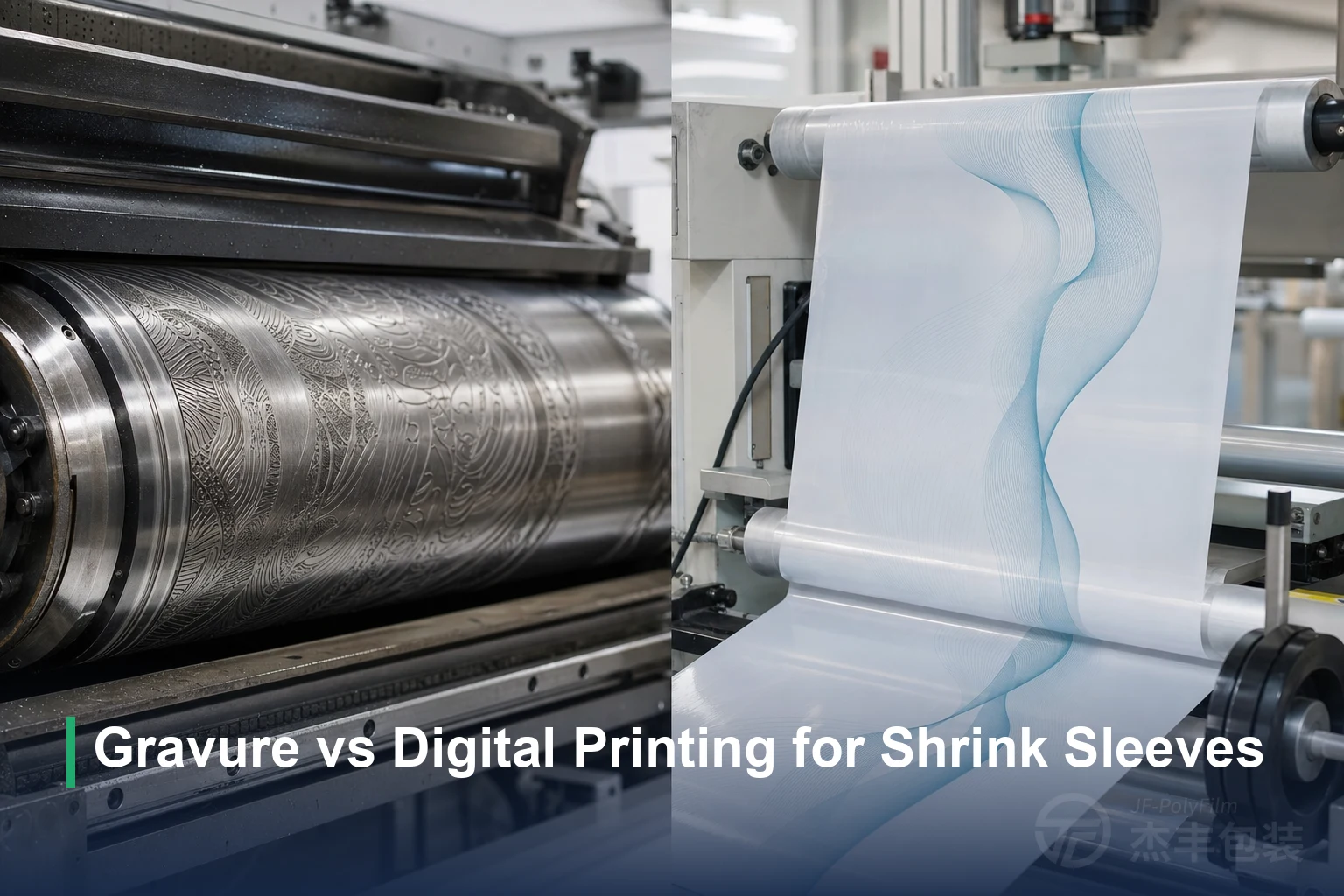
For a shrink sleeve, the choice between rotogravure and digital printing is settled mostly by run length. Gravure, printing from engraved metal cylinders, earns back its high setup on long repeating runs; digital, imaging straight from the file with no plates, owns short runs and frequent version changes.
Key takeaways
- Per-unit cost crosses over as volume climbs — below the crossover digital is cheaper, above it gravure is.
- Only digital prints variable data, putting a unique code, serial, or region on each sleeve from a single run.
- The printing method does not change the unprinted PETG film underneath; the same conditioned film runs on both lines.
Why run length settles the choice
Run length decides because the two methods hide their cost in different places. Gravure spends up front: every color needs its own cylinder engraved with the image, so the outlay is high and the prepress slow before a single sleeve prints — but once those cylinders exist, the press runs fast and the cost of each additional sleeve is very low. Digital inverts that shape. With no cylinder or plate to make, a job starts almost immediately and cheaply, but the per-unit cost stays flatter and does not fall the way gravure’s does as the run stretches out.
Plot those two cost curves against quantity and they cross. Below the crossover, digital’s near-zero setup wins outright; above it, gravure’s low running cost has overtaken the higher per-sleeve price of digital.
Where each method pays off
| Decision factor | Rotogravure | Digital |
|---|---|---|
| Setup / tooling cost | High — a cylinder engraved per color | Low — no plates or cylinders |
| Run-length sweet spot | Long, repeating orders | Short runs and one-offs |
| Changeover between SKUs | Slow — re-engraving per change | Immediate — swap the file |
| Per-unit cost at volume | Lowest once tooling amortizes | Higher as volume climbs |
| Color consistency over a huge run | Excellent — image cut into metal | Good — depends on the press |
| Multiple versions / variable data | Not practical — one fixed image | Native strength |
| Turnaround | Longer, front-loaded by tooling | Rapid |
Rotogravure: built for the long, repeating run
Gravure holds its ground wherever the same design ships in very large, recurring volumes. Ink sits in microscopic cells cut into a metal cylinder and transfers under pressure, one cylinder per color — a mechanism covered in the broader shrink sleeve printing overview, and the reason the method behaves the way it does economically.
Digital: short runs, many versions, fast turns
With the image coming straight from the file, there is no tooling to make and no tooling to remake, so a job starts cheaply, turns around fast, and absorbs change for free.
Because each impression is composed fresh, a run can carry a unique code, a serial number, or a region-specific version on every single sleeve — something engraved cylinders, which repeat one fixed image, simply cannot do.
What the film has to do either way
The film supplied here is unprinted PETG shrink film; the printing itself, gravure or digital, happens at a converter or the brand’s print partner.
For film matched to a bottle’s contour and ready to run on gravure or digital lines alike, the printable substrate is JFPolyFilm’s clear PETG shrink film — the printing route stays the converter’s call, made on the run-length logic laid out above.
Frequently Asked Questions
Is gravure or digital printing cheaper for shrink sleeves?
When does digital printing beat gravure on sleeves?
Does the printing method change which shrink film to order?
Related Articles
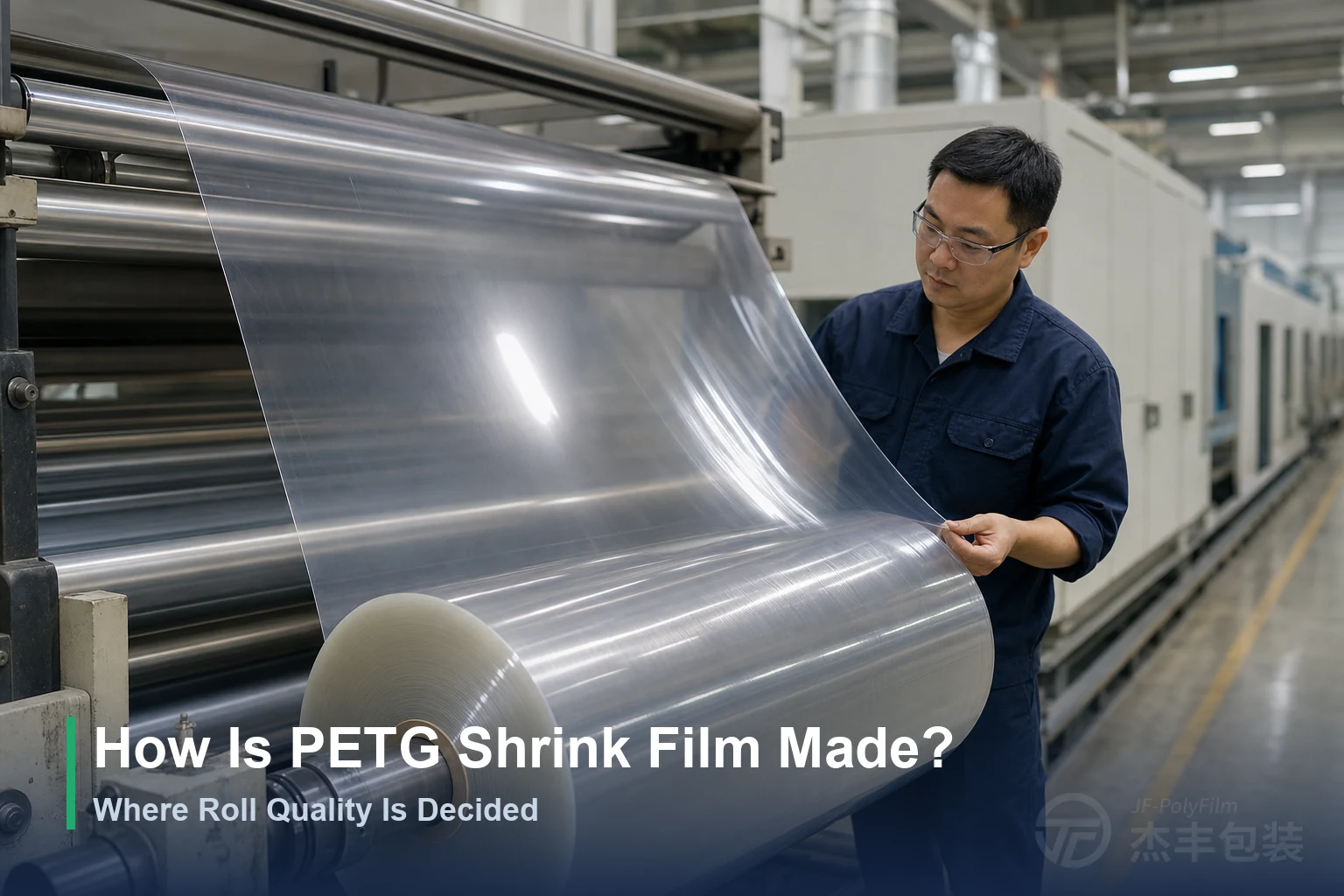
How Is PETG Shrink Film Made? Where Roll Quality Is Decided
How PETG shrink film is made, and which production stage sets each line buyers check on arrival: gauge tolerance, TD/MD shrink, haze, tensile strength, roll labels.
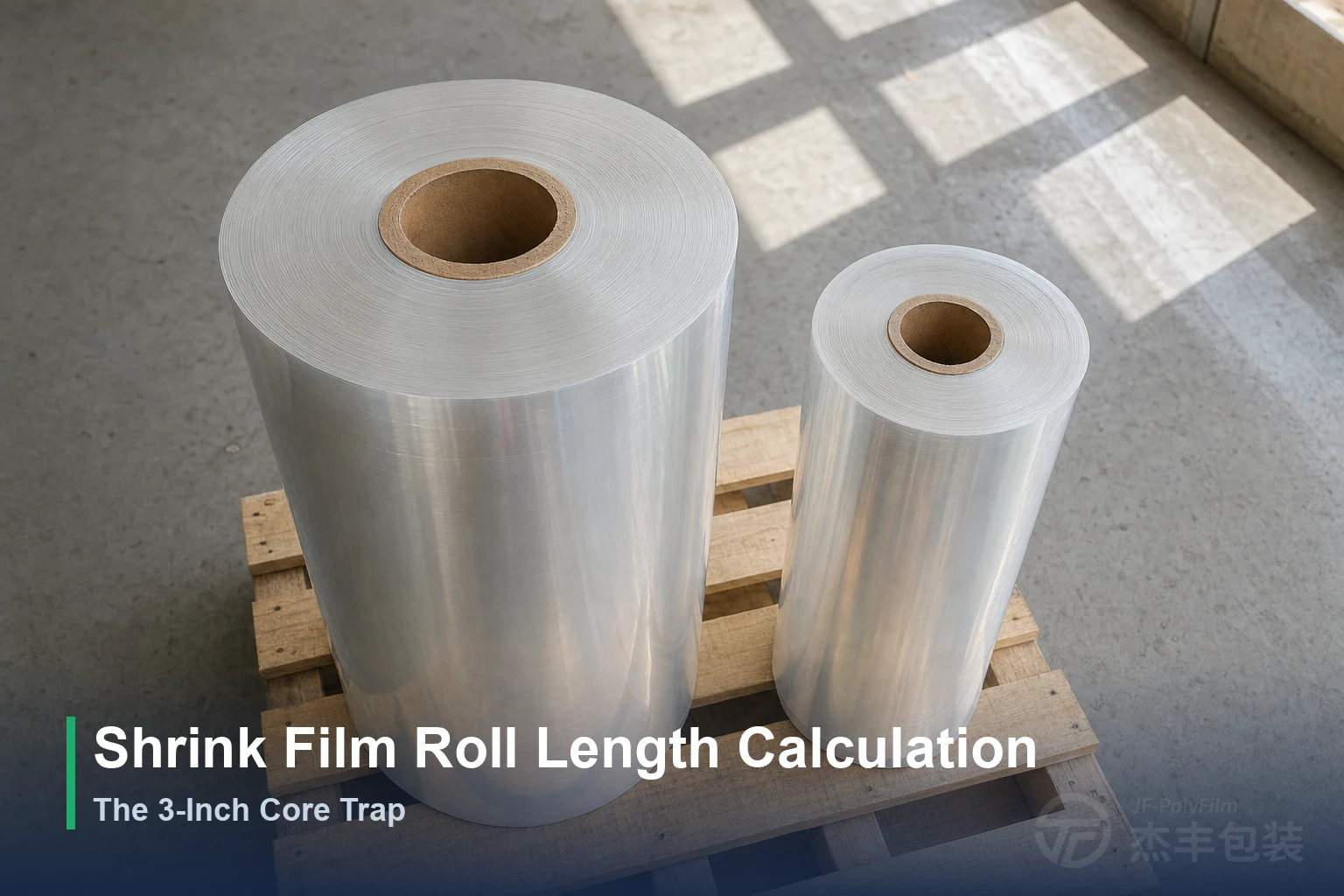
Shrink Film Roll Length Calculation: The 3-Inch Core Trap
Formulas linking roll diameter, length and weight, worked metric and imperial examples, a 30–60 μm diameter table, and why core size and trapped air shift the result.
Need Expert Advice on Shrink Film?
Our technical team can help you choose the right film for your application.
Contact Us