
PETG Shrink Film Density: Cost, Recycling, Grade
Density drives three things a buyer feels: how much film a kilogram yields, whether a sleeve floats or sinks in recycling, and how clear and white grades split.
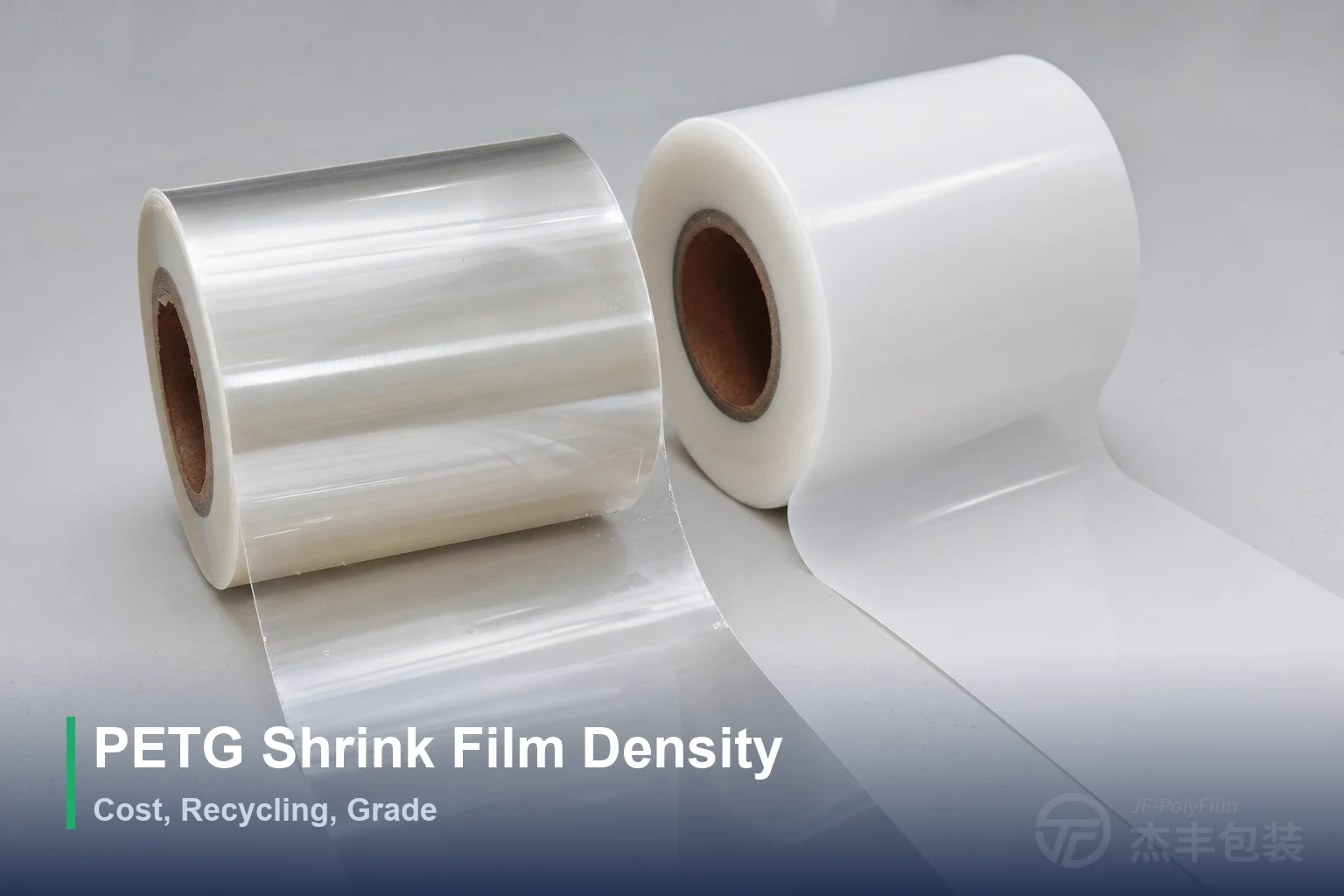
PETG shrink film density is easy to skim past on a datasheet, yet for a clear grade it sits near 1.28 to 1.33 g/cm³ — typically about 1.32 — and that one number quietly governs how much film a kilogram yields, whether a sleeve floats or sinks in recycling, and how a white grade is built.
Key takeaways
- Clear PETG shrink film runs about 1.28 to 1.33 g/cm³, typically 1.32 — essentially the density of the base copolyester resin, since a clear grade is a solid, unfilled film.
- Areal weight is density multiplied by thickness, so a lower density yields more sleeve area per kilogram — the basis of what is sold as a high-yield film.
- Water, at 1.0 g/cm³, is the float/sink line in recycling: clear and pigmented PETG sink alongside PET bottle flake (about 1.37 to 1.40), while a below-1.0 micro-voided sleeve floats free of it.
What sets a shrink film’s density
Density is mass divided by volume, and for a shrink film it is decided by two things: the chemistry of the polymer and whatever has been added to or removed from the solid web. A clear PETG shrink film is the simplest case — a solid, unfilled, amorphous sheet — so its density tracks the base copolyester resin almost exactly, landing in the 1.28 to 1.33 g/cm³ band and clustering around 1.32 in a typical grade.
Density at a glance: five reference points
| Material and state | Density (g/cm³) | Vs. water (1.0) | Float or sink | What it changes |
|---|---|---|---|---|
| Clear PETG shrink film (solid, amorphous) | 1.28–1.33 (typ. 1.32) | Above | Sinks | Baseline yield; sinks with PET flake in recycling |
| White PETG, micro-voided | Lower than clear; fully voided < 1.0 | Can be below | Floats when < 1.0 | Higher yield; can separate from the PET stream |
| White PETG, solid TiO₂ pigment | ~1.35–1.45+ | Above | Sinks | Lower yield; sinks with PET flake |
| PET bottle flake (crystalline / oriented) | ~1.37–1.40 (often cited ~1.38) | Above | Sinks | The reference stream a sleeve joins or leaves |
| Water | 1.00 | — | The line itself | The float/sink threshold in recycling |
Density and yield: reading a sleeve by weight
A film’s areal weight — its grams per square metre — is simply its density multiplied by its thickness: a 1.32 g/cm³ clear grade at 45 µm weighs 59.4 g/m², which means one kilogram covers a little under 17 m² of film. Thickness is the other multiplier in that product, chosen on its own terms and worked through in how to choose shrink film thickness, but density is the factor most buyers overlook because it is invisible on the roll.
Density and recycling: float, sink, and where a sleeve lands
A clear PETG sleeve, at roughly 1.32, sits above the line and sinks — landing in the same fraction as the PET bottle flake it was wrapped around, which sinks at about 1.37 to 1.40.
A sufficiently micro-voided white grade falls below 1.0 g/cm³ and floats, so in the same water bath it rises clear of the sinking bottle flake and is skimmed off — a clean, purely physical separation of the label from the container.
Frequently Asked Questions
What is the density of PETG shrink film?
Does PETG shrink film float or sink in water?
Why does white PETG shrink film have a different density than clear?
Related Articles
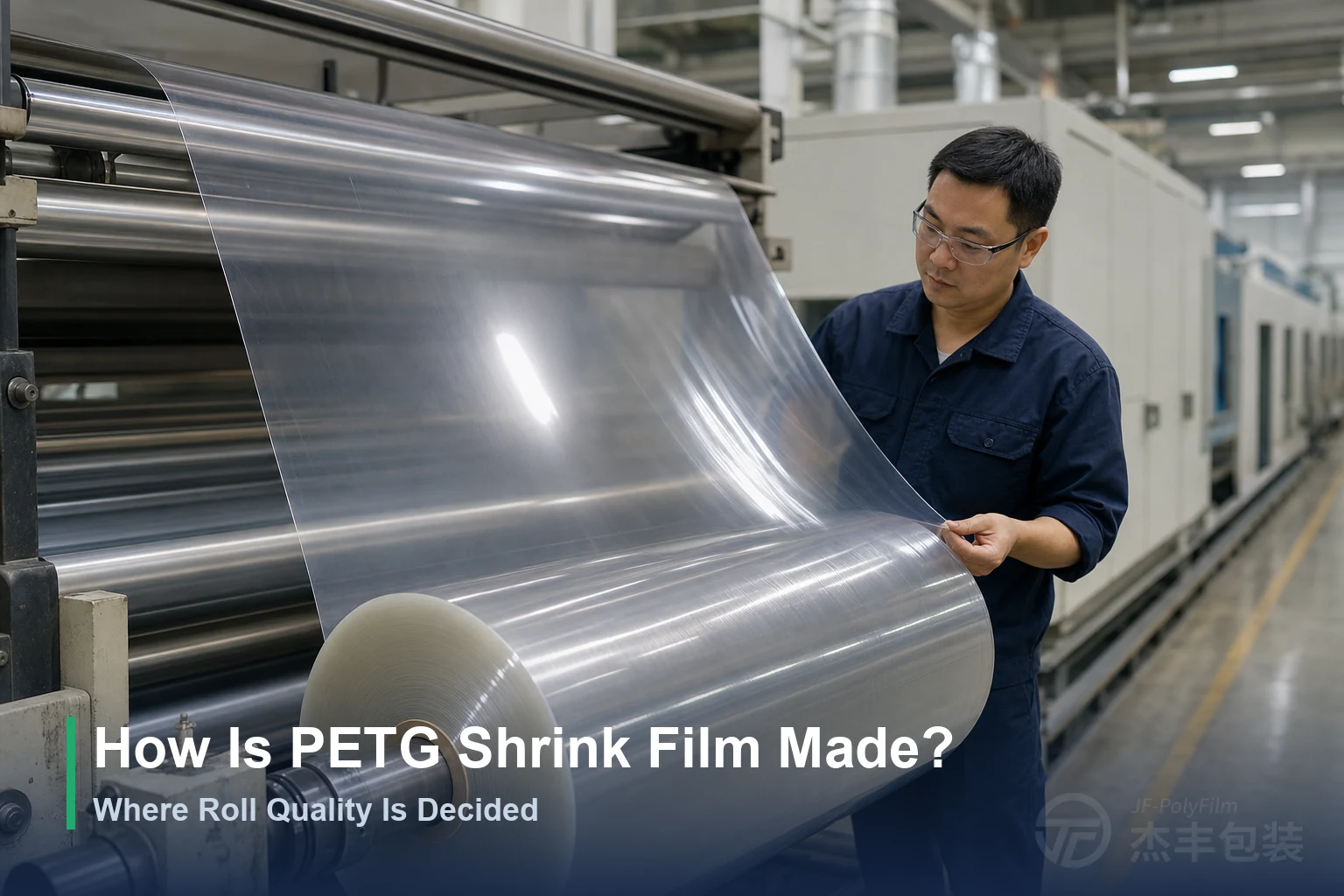
How Is PETG Shrink Film Made? Where Roll Quality Is Decided
How PETG shrink film is made, and which production stage sets each line buyers check on arrival: gauge tolerance, TD/MD shrink, haze, tensile strength, roll labels.
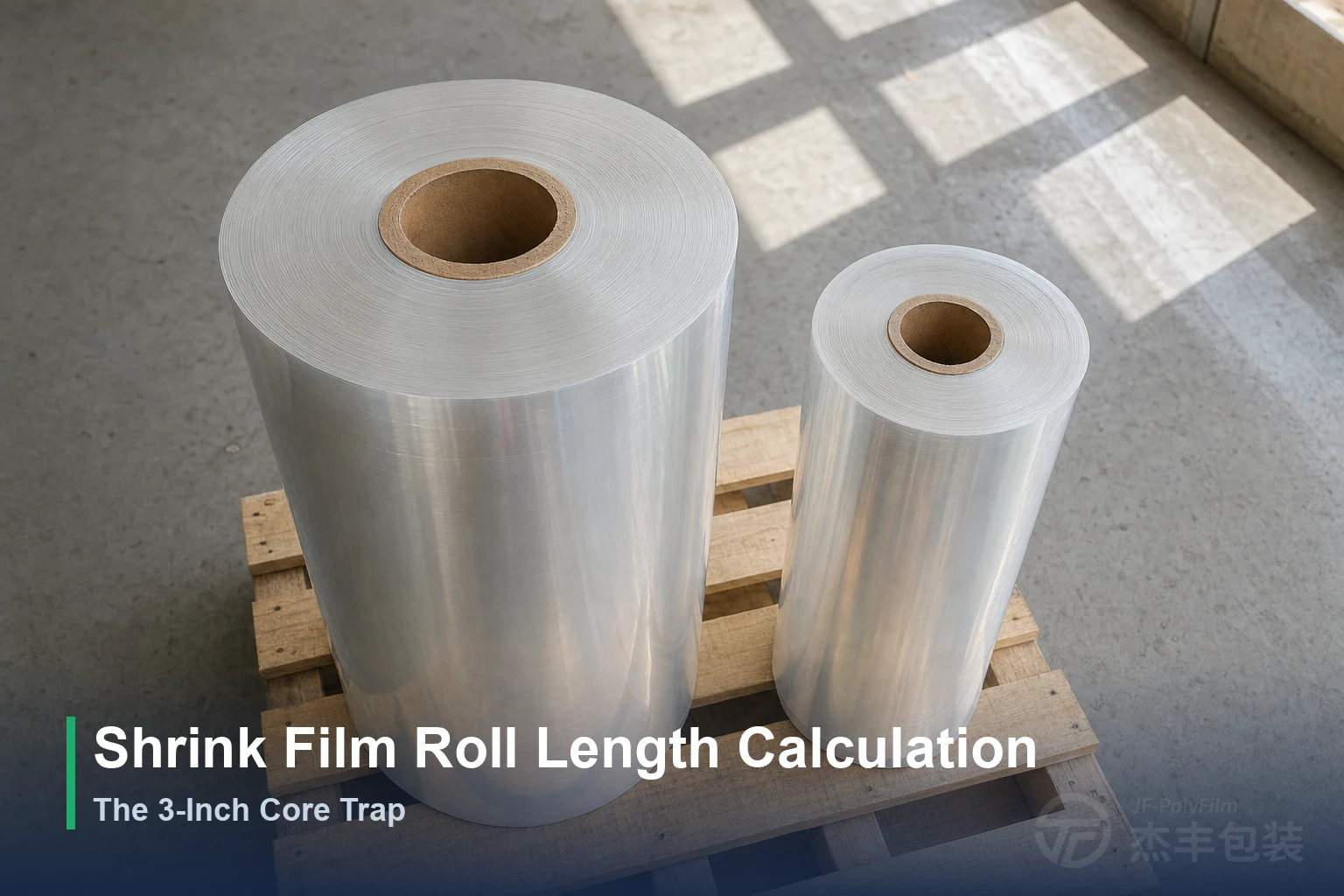
Shrink Film Roll Length Calculation: The 3-Inch Core Trap
Formulas linking roll diameter, length and weight, worked metric and imperial examples, a 30–60 μm diameter table, and why core size and trapped air shift the result.
Need Expert Advice on Shrink Film?
Our technical team can help you choose the right film for your application.
Contact Us