
Matte vs Glossy PETG Shrink Film: Which Finish to Choose
Matte or glossy is a finish decision made at the print stage, not a film grade — and it is not the same as clear versus white. How to match the finish to a brand.
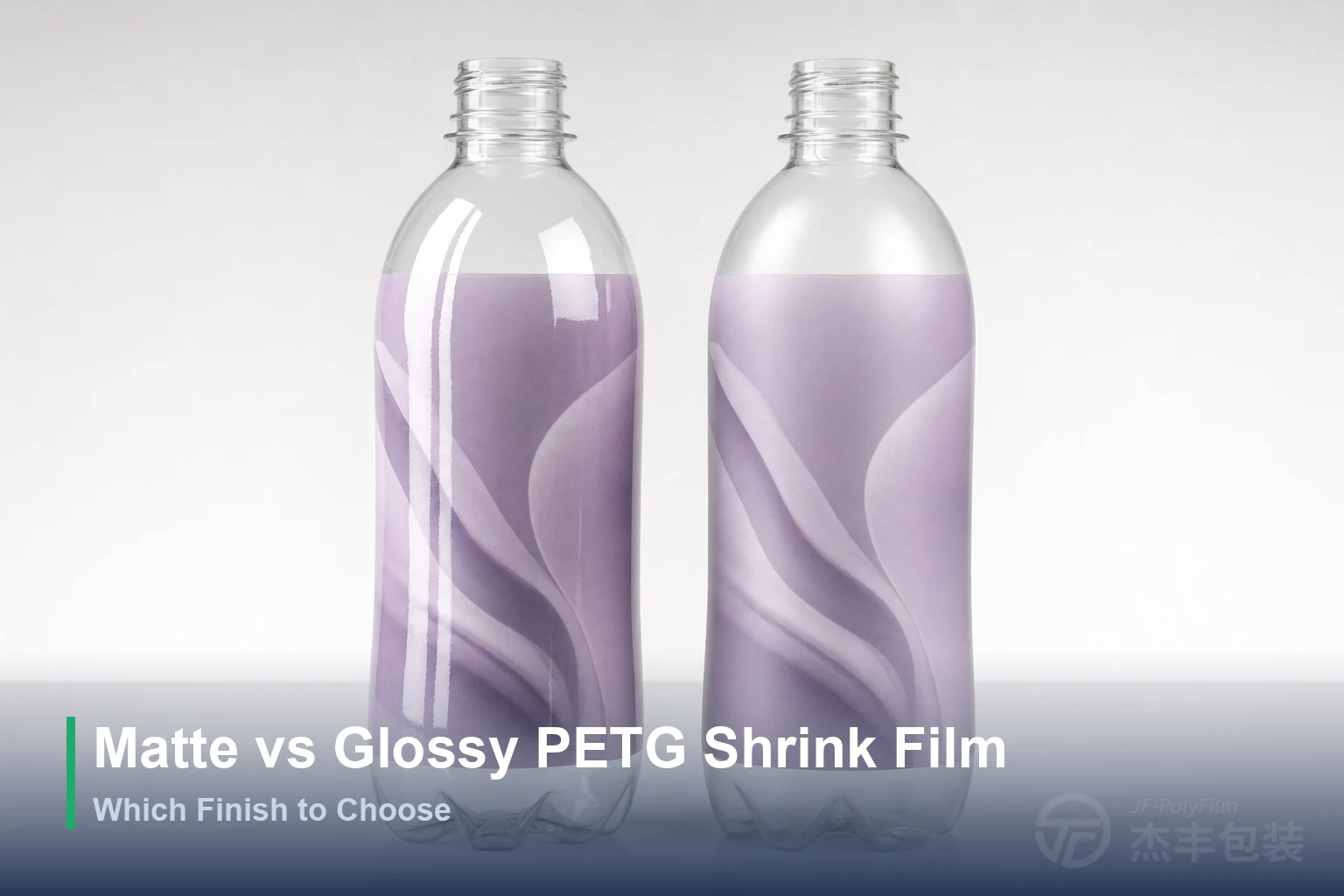
On a shrink sleeve, matte and glossy describe how the finished surface reflects light: a glossy finish is bright and mirror-like with glass-clear depth, while a matte finish scatters light for a low-glare, softer, more restrained look. Both can wrap the exact same bottle. Which one a sleeve ends up with is decided mostly at the print stage rather than by the film underneath it — and it is a different question from whether the film is clear or white.
For the base film underneath either finish, JFPolyFilm supplies clear PETG shrink film that comes off the line glossy and glass-clear and prints directly, ready for whichever finish the artwork calls for.
Glossy and matte: two ways the same sleeve can look
Glossy and matte are the two surface finishes a shrink sleeve can carry, and they sit at opposite ends of one property — how much the surface reflects. A glossy finish is smooth and mirror-like: it bounces light back, deepens dark tones, and pushes colour toward its most saturated, so the pack looks bright and lively.
A matte finish does the reverse. Its surface is microscopically rough, so incoming light scatters instead of reflecting, and the sleeve reads soft, even, and low in sheen.
Where a matte finish actually comes from
The matte or gloss finish on a shrink sleeve is set mostly at the print and converting stage, not by the film a mill supplies. The common route to matte is a matte overprint varnish — a coating laid over the printed artwork as a flood or spot pass — whose slightly rough microsurface scatters light and takes the shine off.
A white PETG grade reads a touch softer because its micro-voided surface is less mirror-like, but that is a by-product of how opacity is made, not a matte finish in the design sense.
Matte vs glossy: the comparison
| Dimension | Matte finish | Glossy finish |
|---|---|---|
| Shelf impression | Restrained, premium, understated | Vivid, eye-catching, saturated |
| Glare under store lighting | Low — scatters light, little reflection | High — mirror-like reflection |
| See-through clarity (on clear film) | Softened, less glass-like | Crisp, glass-like depth |
| Printed colour | Quieter, softer tones | Brighter, deeper, more saturated |
| Fingerprints and scuffs | Hidden — stays clean in handling | Shown — marks are visible |
| Typical fit | Premium spirits, fragrance, skincare, beauty | Bright beverages, mass-market FMCG |
| How it is set | Matte overprint varnish at the print stage | Clear PETG native gloss, or a gloss varnish |
Finish is not the same as clear versus white
Matte-versus-glossy and clear-versus-white are two separate axes, and treating them as one is the mistake that trips up most first specifications.
Whether the pack should reveal or conceal the contents, and whether the fill needs protection from light, belongs to the clear versus white PETG decision, not to the finish question.
Why the finish changes once the sleeve shrinks
A finish that looks right on a flat sample does not read the same after the sleeve draws down onto a curved bottle, so the shelf appearance is the one that counts. Shrink film is printed and finished flat, then heated so it pulls in tight around the container.
Frequently Asked Questions
Is matte or glossy better for a shrink sleeve?
Where does the matte finish on a shrink sleeve come from?
Does a matte finish make a clear shrink sleeve opaque?
Related Articles
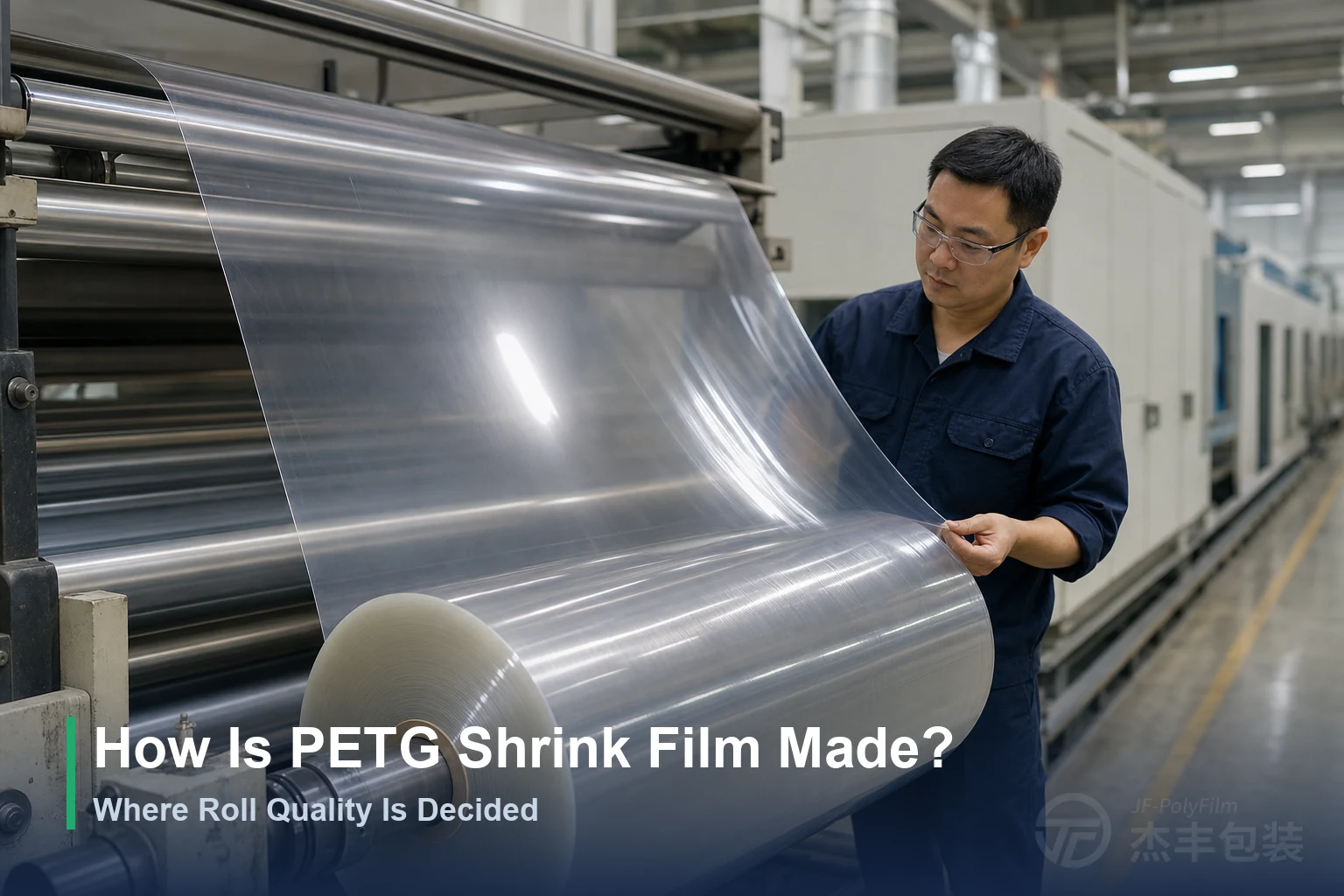
How Is PETG Shrink Film Made? Where Roll Quality Is Decided
How PETG shrink film is made, and which production stage sets each line buyers check on arrival: gauge tolerance, TD/MD shrink, haze, tensile strength, roll labels.
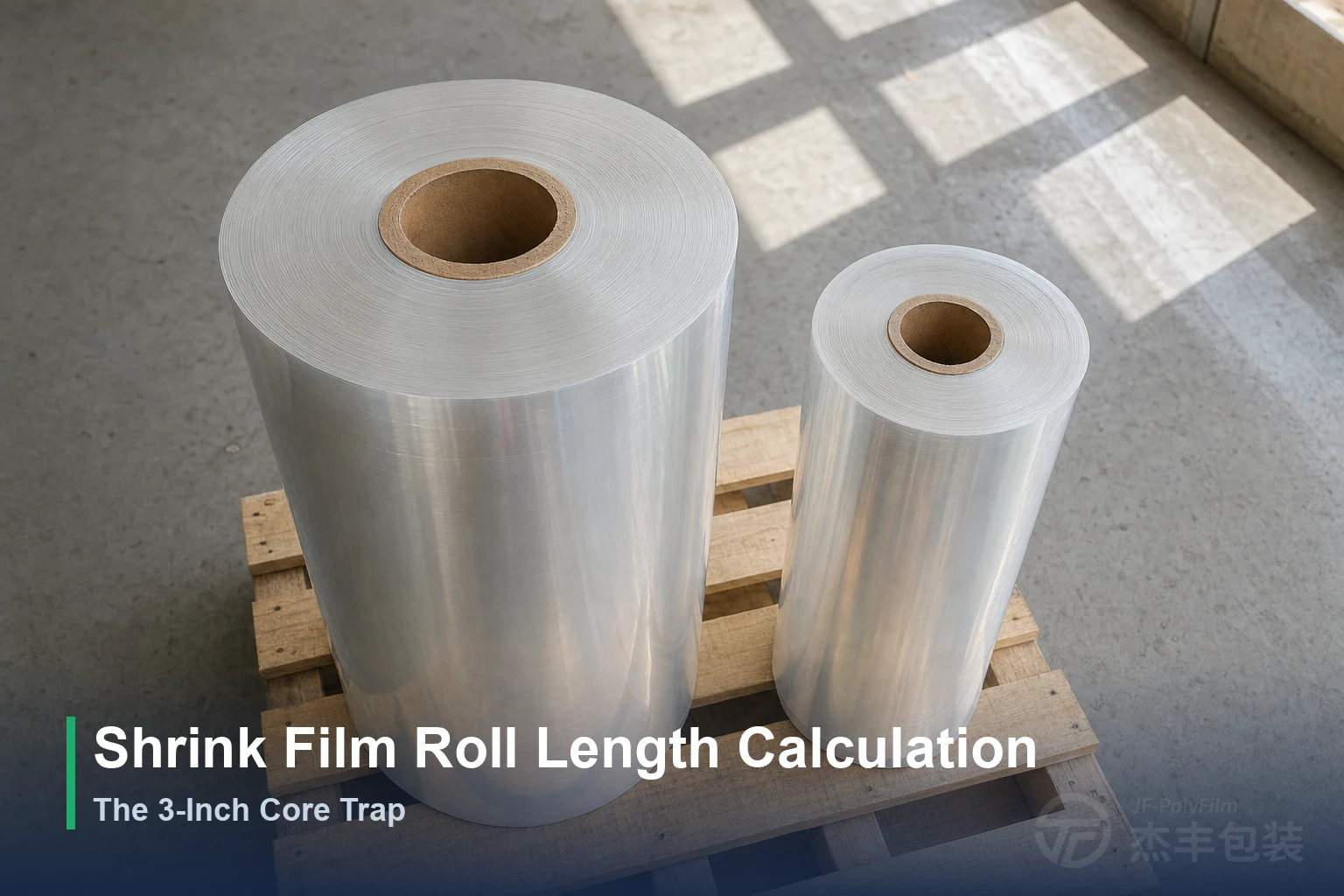
Shrink Film Roll Length Calculation: The 3-Inch Core Trap
Formulas linking roll diameter, length and weight, worked metric and imperial examples, a 30–60 μm diameter table, and why core size and trapped air shift the result.
Need Expert Advice on Shrink Film?
Our technical team can help you choose the right film for your application.
Contact Us