
Shrink Sleeves for Engine Oil and Lubricant Bottles
How to spec shrink sleeves for engine oil and lubricant bottles: conforming to shaped HDPE, surviving oily handling, tamper evidence, SKU sorting, recycling.
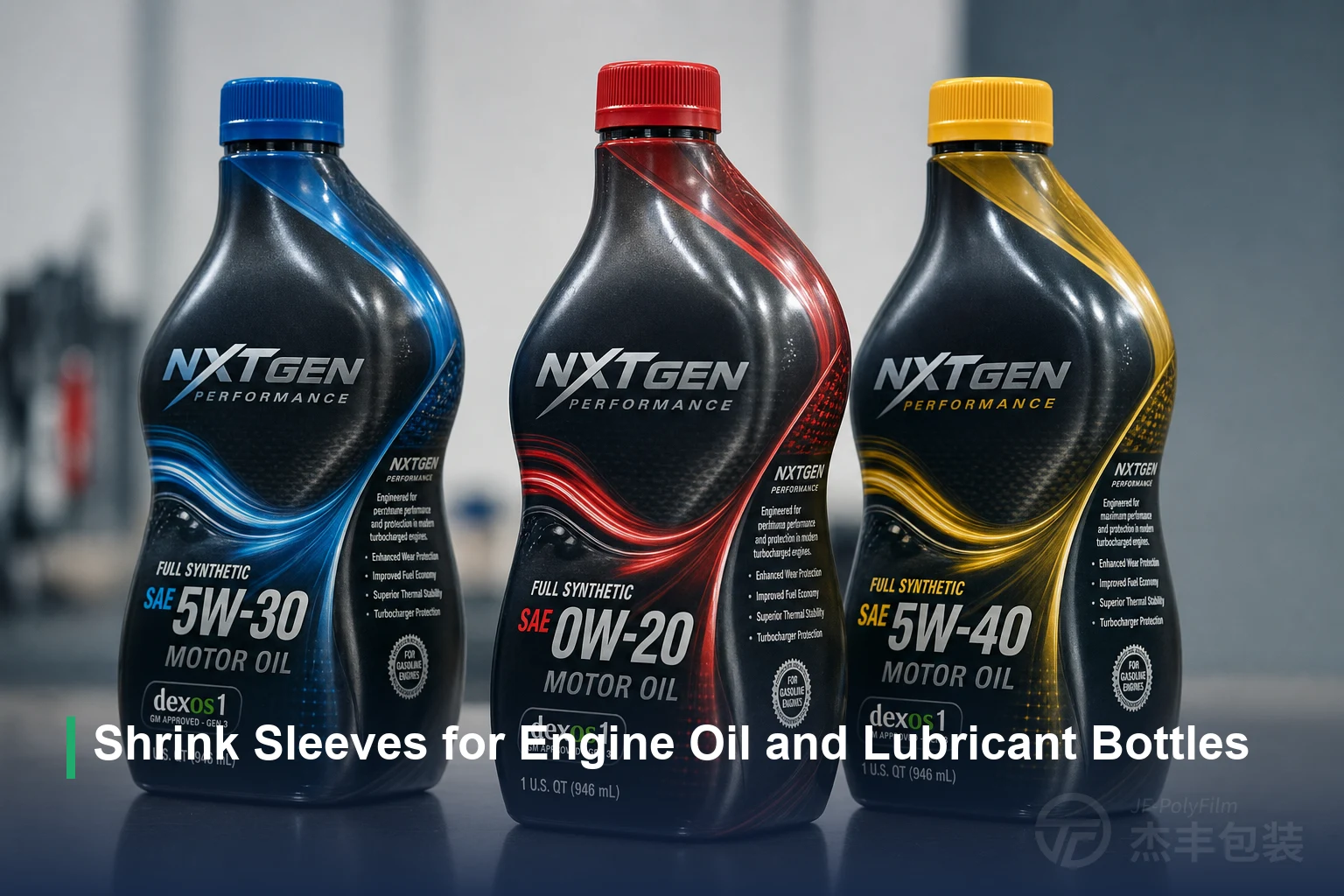
A shrink sleeve for an engine oil bottle is a pre-printed plastic tube slipped over the filled container and heated so it draws tight around the full contour, wrapping the whole body in 360-degree graphics no flat label can cover.
Key takeaways
- High-shrink film with transverse shrink of 70 percent or more seats into the deep curves, waists, and handle wells of shaped automotive bottles where a flat label would lift.
- Carried up over the closure and scored with a perforation, the sleeve tears on first opening — a destructive tamper feature that directly counters illegal refilling, the dominant lubricant counterfeit method.
- Recovery for an HDPE (resin code 2) or PP (resin code 5) lubricant bottle differs from a PET beverage bottle: a PET-based sleeve sinks and separates by density, while a polyolefin sleeve floats and stays with the HDPE.
Why a shrink sleeve fits an oil bottle, and when another format wins
The defining advantage is full-body conformance: one printed surface covers the whole bottle shape, follows curves and recesses no adhesive label can sit flat against, and arrives as a tube that prints cold and shrinks later.
The real comparison is against the formats a buyer actually chooses between:
| Decoration format | Full-body 360° coverage | Fit on shaped/handled bottles | Oil and scuff resistance | Built-in tamper evidence | SKU-change flexibility | Per-unit cost |
|---|---|---|---|---|---|---|
| Shrink sleeve | Yes | High (draws into deep contours) | High (reverse-printed) | Yes (over-cap perforation) | High (reel change) | Medium |
| Pressure-sensitive wrap label | Near-360° (seam; no vertical contour) | Low (tents on curves) | Low (edges lift, ink exposed) | No | High | Low–medium |
| In-mould label | Partial (panel, mould-set) | High (fused in the wall) | Very high (in the wall) | No | Low (set at moulding) | Medium–high |
Conforming to shaped HDPE and PP bottles
Conformance comes down to how far the film can shrink across its width. Film that draws 70 percent or more in the transverse direction pulls into those recesses and reads as a seamless printed skin, while machine-direction shrink is kept low so the artwork holds its height instead of distorting vertically as the tube collapses inward.
Surviving oil, rough handling, and warehouse conditions
Durability is the real differentiator for aftermarket packaging, and reverse printing delivers it. Because the artwork sits on the inside of the film, the finished sleeve shows only bare film on the outside: a smear of oil, scuffing as bottles rub in a transit case, or a customer’s greasy grip all reach the outer film and stop there. The graphic underneath stays sealed against the bottle wall, and because the shrunk sleeve grips the full circumference there is no adhesive edge to catch and peel and no overlap flap to lift — the two failure modes most common on wrap labels exposed to oil.
Tamper evidence and counterfeit defence
Extended up and over the closure and scored with a perforation at the cap shoulder, the sleeve has to tear before the cap can turn. That first opening rips the printed graphic along the perforation, and because the artwork is continuous across the break, the torn pattern cannot be re-aligned to look untouched.
Matching band and cap geometry to closure type is its own subject, treated in the guide to tamper-evident shrink bands.
Frequently Asked Questions
Do shrink sleeves hold up against oil and grease on engine oil bottles?
Can a shrink sleeve provide tamper evidence on an oil bottle?
What film thickness is typical for lubricant bottle sleeves?
Related Articles
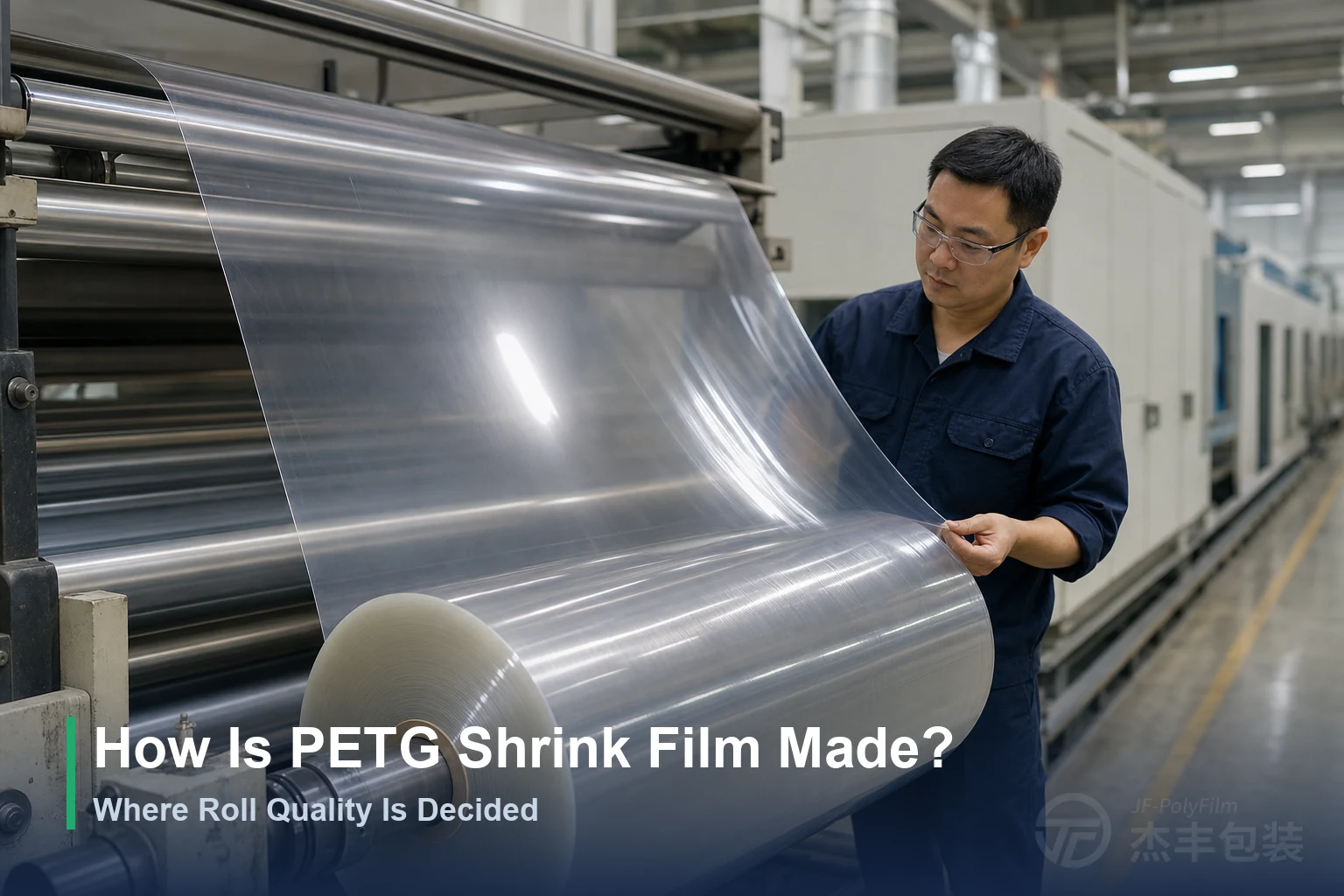
How Is PETG Shrink Film Made? Where Roll Quality Is Decided
How PETG shrink film is made, and which production stage sets each line buyers check on arrival: gauge tolerance, TD/MD shrink, haze, tensile strength, roll labels.
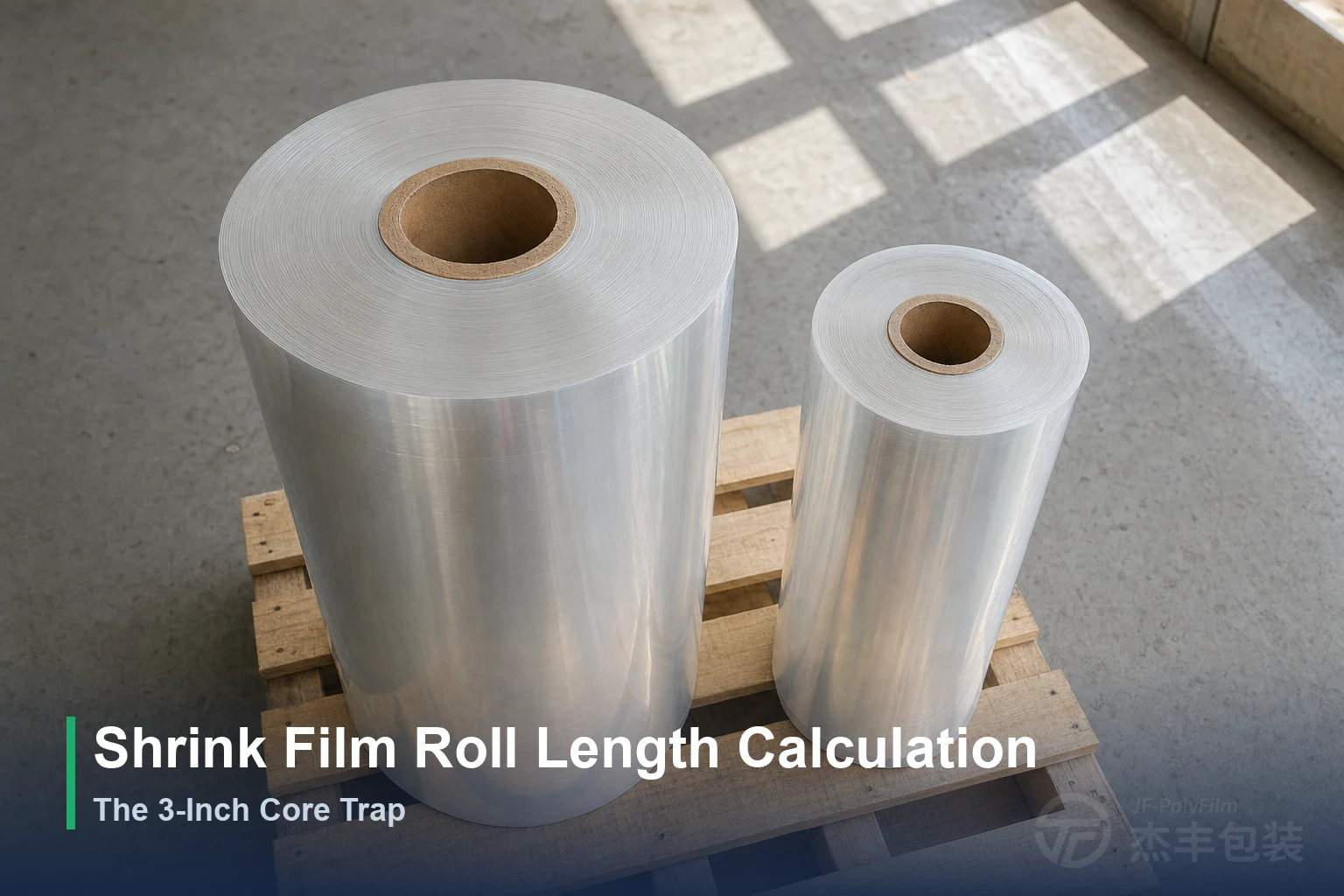
Shrink Film Roll Length Calculation: The 3-Inch Core Trap
Formulas linking roll diameter, length and weight, worked metric and imperial examples, a 30–60 μm diameter table, and why core size and trapped air shift the result.
Need Expert Advice on Shrink Film?
Our technical team can help you choose the right film for your application.
Contact Us