
What PPWR Means for Shrink Sleeves: 2030 Rules & Routes
How the EU Packaging and Packaging Waste Regulation turns recyclability and recycled content into market-access conditions for shrink sleeves — the timeline, what each clause means for the label, and which compliant film routes answer it.
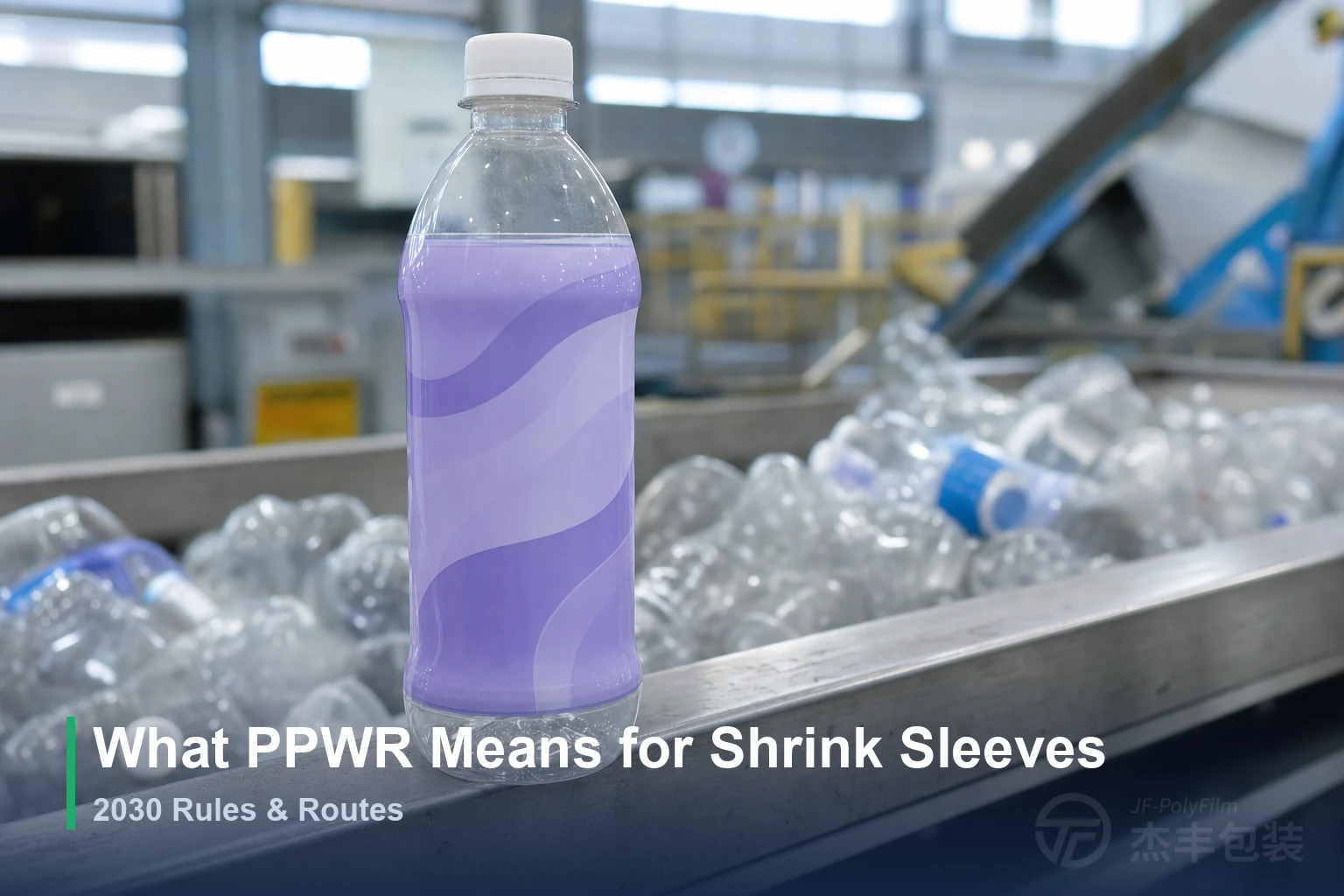
PPWR — the EU Packaging and Packaging Waste Regulation, formally Regulation (EU) 2025/40 — is the directly applicable law that replaces the old packaging directive and turns recyclability and recycled content into conditions for staying on the EU market. For a shrink sleeve, that reframes the label from a decorative choice into a compliance decision.
The reason a sleeve now sits inside a regulatory question, rather than beside one, is that recyclability under PPWR is scored at the level of the whole package — and the sleeve is part of that package. What follows sets out the timeline, translates the core clauses into what each one means for the label specifically, and maps the compliant film routes a sleeve program can take. It stays on the regulatory and commercial side of the subject; the physics of how a sleeve actually separates inside a recycling line is a different topic, covered in the guide to whether PET shrink sleeves are recyclable.
Key takeaways
- PPWR entered into force on 11 February 2025 and generally applies from 12 August 2026, with the recyclability grade C floor arriving on 1 January 2030 and the bar rising to grade B from 1 January 2038.
- Packaging is graded A to E by recyclable share by weight — A is ≥95%, B is ≥80%, C is ≥70% — and a package below grade C loses EU market access from 2030.
- A sleeve is judged as part of its host bottle: an incompatible full-body sleeve can drag an otherwise grade-A PET bottle below the market-access floor, which is why sleeve material choice now carries the whole pack.
- Recyclability (Article 6) and recycled content (Article 7) are two independent obligations; contact-sensitive PET packaging must carry 30% post-consumer content from 2030, rising to 50% by 2040, counting post-consumer material only.
- Three film routes answer the requirements — same-stream crystallizable PET, a separable wash-off/float design, and recycled-content RPET — each addressing a different clause rather than a single fix covering all of them.
Why PPWR is not the directive it replaces
What changes the most under PPWR is its legal form: it is a Regulation, not a directive. A regulation applies directly and uniformly across every EU member state the moment it takes effect, with no national laws to transpose it first. That is exactly why the EU moved this file from the old Directive 94/62/EC to Regulation (EU) 2025/40 — to replace 27 slightly different national implementations with one common rulebook, and to close the gaps and inconsistencies a directive inevitably leaves behind.
For an exporter, the practical read is that there is no longer a friendlier member state to route packaging through. A sleeve that fails the recyclability test fails it everywhere in the single market at once, on the same date. The deadlines below are therefore fixed reference points, not opening positions in a national negotiation.
| Milestone | Date | What it means for a sleeve program |
|---|---|---|
| Entry into force | 11 February 2025 | The Regulation is law across the EU; the clock on every downstream deadline starts here |
| General date of application | 12 August 2026 | Core obligations begin to apply, with some provisions carrying longer transition periods |
| Design-for-recycling methodology | Before 1 January 2028 | The Commission is due to set the grading method through delegated acts, turning the A–E scale into a testable standard |
| Recyclability grade C floor | 1 January 2030 | Every package must reach at least grade C or lose EU market access |
| Recycled-content minimums begin | 1 January 2030 | Contact-sensitive PET packaging must carry 30% post-consumer content |
| Recyclable at scale | 1 January 2035 | Design alone is no longer enough; the package must be recovered through established infrastructure |
| Grade B floor | 1 January 2038 | The bar rises to grade B; grade C designs drop out of the market |
| Second recycled-content step | 1 January 2040 | Contact-sensitive PET packaging rises to 50% post-consumer content |
What PPWR actually asks of a sleeve
The obligations that touch a sleeve come from two separate articles that are easy to blur together. Reading them apart is the first step to specifying the right film.
Recyclability (Article 6). From 2030 every package must be designed for recycling and graded on an A-to-E scale by the share of its weight that can be recycled — grade A at ≥95%, B at ≥80%, C at ≥70%, with D and E below 70% barred. From 2035 a design must additionally be recyclable at scale, meaning recovered through established industrial infrastructure rather than only in principle, and from 2038 the floor climbs to grade B. These are two distinct bars, and planning for one is not planning for the other: a sleeve can be designed to a recognised recyclability protocol yet still fall short of “at scale” if the infrastructure to recover that design is not actually running at volume in the destination market. The exact grading method arrives through delegated acts due before 2028, so the thresholds are set while the weighting detail is still being finalised, and the quantitative bar for “at scale” is among the points those acts have yet to fix.
The meaning for a sleeve is direct and often underappreciated: the label is scored as part of the host bottle. A single incompatible full-body sleeve can pull a bottle that would otherwise grade A down toward C or below — enough to breach the 2030 floor. The mechanism by which a mismatched sleeve does that damage inside a sorting line is set out in the recyclability pillar; the regulatory point here is simpler, that the sleeve is no longer a bystander to the bottle’s grade but a determinant of it.
Recycled content (Article 7). The Regulation also sets rising minimums for post-consumer recycled material in plastic packaging — for contact-sensitive PET packaging, 30% from 2030 and 50% from 2040, counting post-consumer content only. The exact figure tracks the packaging category, so a program should confirm the minimum for its own format — single-use plastic beverage bottles, for instance, reach a higher share by 2040. A sleeve that blends in recycled PET contributes to that account, which is the entire role of RPET shrink film and its recycled-content proof — but recycled content is a distinct obligation from recyclability, and meeting one says nothing about the other.
Separability, coverage and marking. Whether the whole pack stays recyclable turns on how cleanly the sleeve can be separated or read: coverage area, adhesive release, and polymer match all feed the grade. Here a caution matters. PPWR itself does not legislate a maximum sleeve coverage percentage; the working figures — recommendations that a label cover only part of the bottle so more of the transparent body stays exposed — come from industry design-for-recycling protocols such as RECOUP and RecyClass, which the grading leans on rather than from the regulation’s own text. Alongside separability, PPWR adds harmonised labelling and sorting-information requirements, so artwork and format have to leave both the sortation marking legible and the bottle body readable.
| PPWR requirement | What it means for a shrink sleeve | Compliant route |
|---|---|---|
| Design for recycling, graded A–E (Art. 6) | The sleeve is scored as part of the host bottle; an incompatible full-body sleeve can pull a recyclable PET bottle below the grade-C floor | Same-stream CPET, or a separable float-off design |
| Recyclable at scale from 2035 | The design must work in real, established recycling infrastructure, not only in principle | A route already accepted by recycler design protocols |
| Recycled-content minimums (Art. 7) | The plastic in the pack must include a rising share of post-consumer material | RPET sleeve film adds to the recycled-content account |
| Separability and material compatibility | Coverage, adhesive release and polymer match decide whether the whole pack stays recyclable | Wash-off/separable construction, verified against design protocols |
| Labelling and sorting information | Packaging must carry harmonised sorting and identification marking | Design the artwork and format to keep the marking legible and the body sortable |
The material decisions the regulation forces
Once the clauses are read as market-access conditions, they resolve into a short list of material paths — and one material they push out. The regulation never issues a design brief, but the grade floor does the work of one.
PVC is the clearest casualty. Nothing in PPWR names it, yet a full-body PVC sleeve contaminates the recovered PET and drags its host bottle below grade C, so the 2030 floor removes it from the market by consequence rather than by prohibition. Several large European beverage and brand owners had already committed to moving away from PVC sleeves; the Regulation converts that voluntary trend into a hard deadline.
A standard glycol-modified PETG sleeve is the more subtle trap, because the PET family name reads as reassurance. A conventional full-body PETG sleeve sinks alongside PET bottle flake rather than separating from it — the mechanism belongs to the recyclability pillar and is not repeated here — and for that reason standard printed PETG full-body sleeves are not currently supported by the recycler design protocols the grading relies on. Being PETG does not, on its own, satisfy Article 6. Compliance means choosing a specific route:
- Same-stream crystallizable PET. A CPET sleeve shares the bottle’s chemistry and survives the recycling-line heat, so label and bottle are recovered together in the RIC 1 PET stream — the route explained in how CPET recycles in the RIC 1 stream.
- Separable wash-off or float-off designs. A construction built to release or float away from the bottle during washing keeps the recovered PET clean, the path covered in bidirectional wash-off shrink film.
- Recycled-content RPET. For the Article 7 obligation rather than the Article 6 one, an RPET grade raises the post-consumer share in the pack, detailed in the RPET explainer.
Each route answers a different clause. A program that needs both recyclability and recycled content specifies for both, because no single sleeve choice discharges the two obligations at once.
What exporters and brands should do now
The sensible response is to back-plan from the 2030 floor rather than treat it as distant. A sleeve specified today will be printing for years, and any bottle line still running a full-body PVC or standard PETG sleeve at the end of the decade faces a market-access problem, not a design preference. Working backward from 1 January 2030 leaves time to qualify a compliant grade, re-tool artwork within the coverage and separability guidance, and validate the change against destination-market design protocols before the deadline compresses the schedule.
Alignment with the film supplier is the practical hinge, and it splits cleanly along the two obligations. On the recyclability side, the questions are which route the grade supports, whether its construction matches a recognised design protocol, and how the sleeve’s coverage and separability affect the host bottle’s grade. On the recycled-content side, the questions are what post-consumer percentage the grade carries and whether the supplier can document it per shipment rather than assert it. A grade that answers one set of questions well says nothing about the other, so a program that has to satisfy both keeps two checklists, not one.
Designing separability and material compatibility in from the film upward — rather than bolting a recyclability story onto a sleeve chosen for shelf appeal alone — is what keeps the whole pack above the grade floor as the bar rises from C to B across the decade. The change also compounds: a grade qualified for the 2030 floor should be checked against the stiffer 2035 at-scale and 2038 grade-B tests before it is locked in, so that a single qualification carries the program through the decade rather than forcing a second re-tool a few years later.
Where a compliant film fits — and where it stops
As a manufacturer of PETG, CPET, RPET and bidirectional shrink film, we make the grades these routes call for: CPET for same-stream recovery, bidirectional wash-off for separable designs, and RPET for the recycled-content side of the obligation. That is the honest extent of what a film supplier contributes — a sleeve engineered to a recognised route, with the documentation to support the claim behind it.
What it is not is a compliance guarantee for the finished package. Whether a pack is genuinely recovered depends on the entire package — bottle, closure, adhesive, artwork — and on the recycling infrastructure where it is discarded, which varies across the EU and continues to develop toward the 2035 recyclable-at-scale test. A compliant sleeve film is one necessary link in that chain, not the whole of it. A film supplier that promises the label alone makes a bottle line PPWR-compliant is overstating what any single component can do.
For a bottle program aiming to keep the sleeve and bottle in one PET stream, the grade to start specifying against PPWR is CPET shrink film — share your destination markets and bottle details, and we will map the route and the supporting documentation to your timeline.
Frequently Asked Questions
Is PPWR a law that applies directly, or a guideline each country adapts?
Does PPWR ban PVC shrink sleeves outright?
Does a recyclable or recycled-content sleeve make my whole package PPWR-compliant?
When do the PPWR recyclability rules actually start to bite?
Is a standard PETG shrink sleeve automatically compliant because it is PET-family?
Related Articles
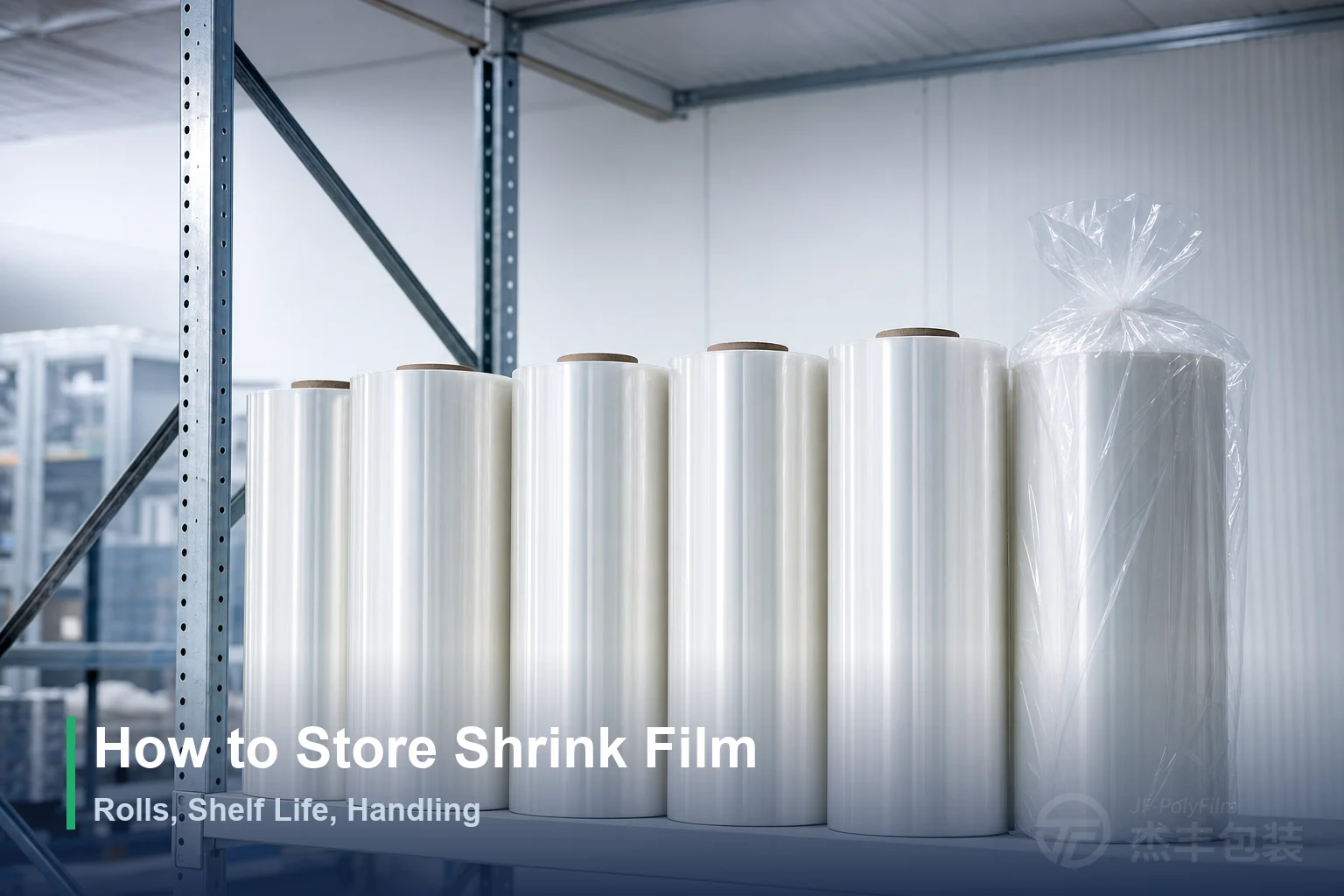
How to Store Shrink Film: Rolls, Shelf Life, Handling
What the 10–30°C, 12-month storage window actually protects, how to stand rolls so they don't flat-spot, and why film has to acclimate before it reaches the line.
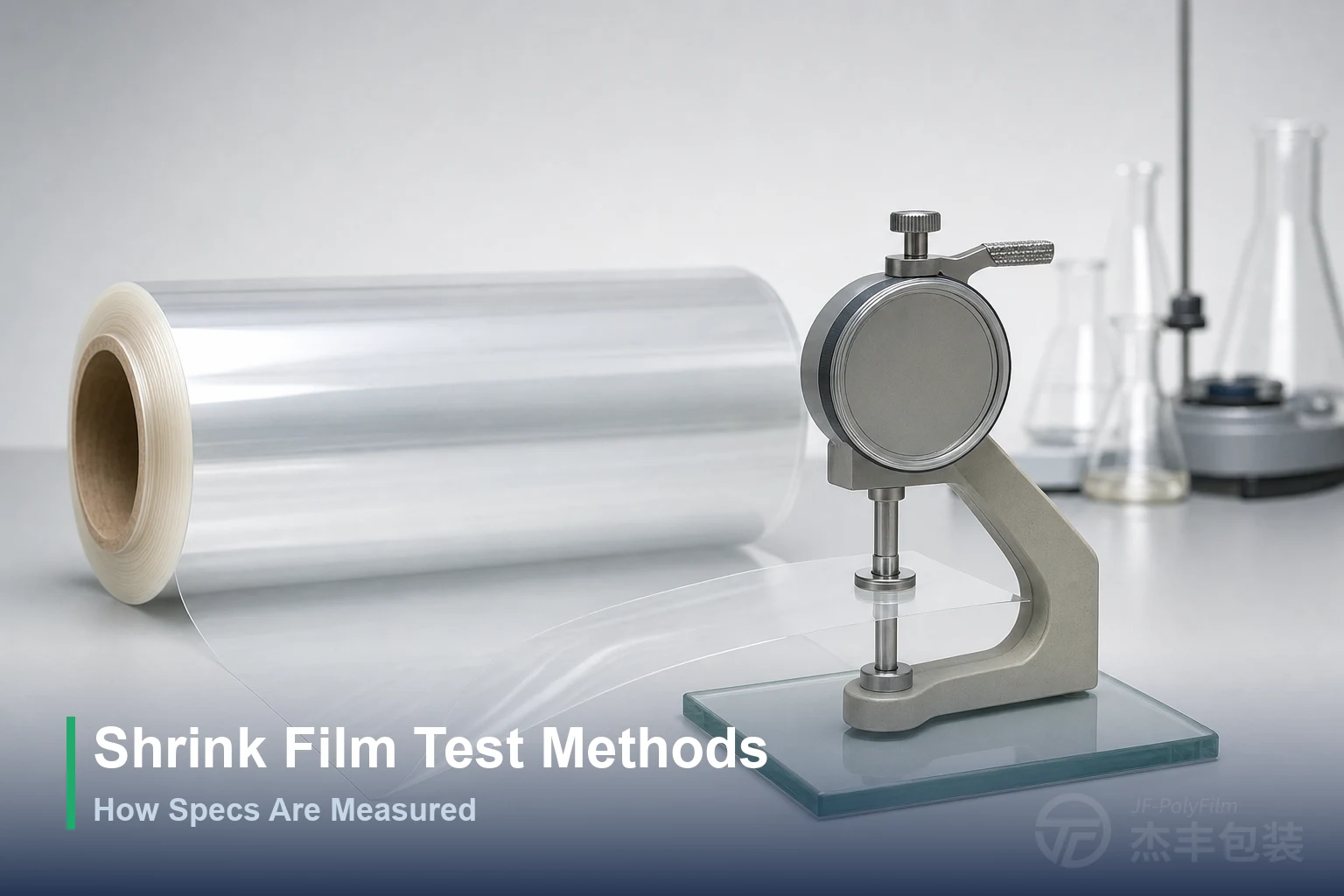
Shrink Film Test Methods: How Specs Are Measured
Every figure on a shrink film datasheet or COA traces back to a standard method. See which ASTM and ISO tests measure shrinkage, tensile, haze, and gauge, and how to read the report.
Need Expert Advice on Shrink Film?
Our technical team can help you choose the right film for your application.
Contact Us