
Anti-Counterfeit Shrink Sleeves: Layered Brand Protection
How a full-body shrink sleeve carries layered authentication — overt, covert, forensic, and serialized features — and where the film maker's job ends and the converter's begins.
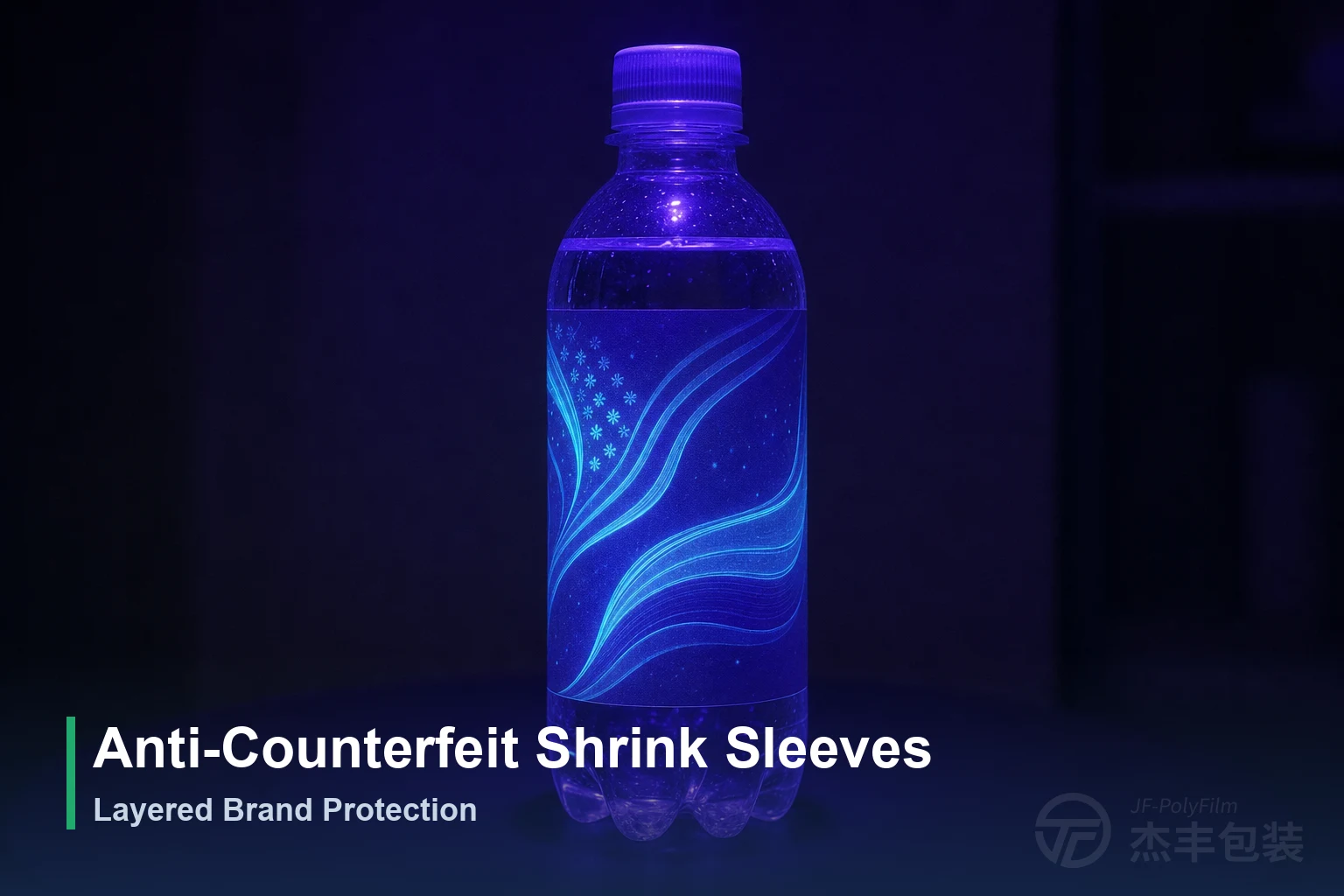
An anti-counterfeit shrink sleeve is a full-body printed sleeve that carries authentication features — some visible to a shopper, some hidden until a lamp or lab reveals them — so that a buyer, an inspector, or a laboratory can confirm a pack is genuine rather than a copy. The sleeve is not the defence in itself; it is the surface those defences are printed onto.
Key takeaways
- Security features are layered on purpose: no single one is meant to be unbreakable, and stacking several raises the cost and difficulty of a convincing copy.
- The industry sorts features by who verifies them — overt (a consumer, by eye), covert (an inspector, with a device), and forensic (a laboratory) — with a serialization layer that gives every unit a unique, traceable code.
- The features themselves are printed and coded at the converter and brand-owner stage; the film’s part is a clear, tightly drawing PETG substrate that lets those features register sharply and stay legible on a curved surface.
Authentication Versus Tamper Evidence: Two Different Questions
The short version is that tamper evidence tells you whether a pack was opened, while authentication tells you whether it is real.
This article follows the authentication axis; the definition of the sleeve format itself sits in what is a shrink sleeve label.
The Four Layers a Sleeve Can Carry
Anti-counterfeit protection is built in layers, sorted by who does the verifying and what they need to do it.
| Layer | Verified by / how | Generic feature examples | How the sleeve carries it |
|---|---|---|---|
| Overt (Level 1) | Consumer / front line, by eye | Colour-shift optical inks, holographic features, tactile or embossed cues | Printed on the 360-degree visible face; read the moment a pack is handled |
| Covert (Level 2) | Enforcement / brand inspectors, with a device | UV or IR fluorescent inks, microtext, hidden images | Buried in the print layers; appear only under a dedicated lamp or magnification |
| Forensic (Level 3) | A laboratory, with instruments | Molecular markers / taggants (chemical or biological) | Blended into ink or coating and printed with the sleeve; read under lab authority |
| Serialization / track-trace | The whole chain, by scan and system | Unique 2D / DataMatrix codes, aggregation, GS1-type standards | Printed or applied on the sleeve; scanned to authenticate and trace origin |
Why a Full-Body Sleeve Makes a Good Security Carrier
A full-body shrink sleeve suits layered security because it is a seamless 360-degree surface that draws tight to the container, which lets several features share one label without crowding. A small pressure-sensitive patch has room for a logo and little else; a sleeve wraps the whole body, so brand graphics, an overt colour-shift panel, a covert mark, and a serialized code can all be arranged on the same surface with room to spare.
Where the Film Ends and the Security Begins
The security features are created at the converter and brand-owner stage, not by the film maker — and being clear about that division is more useful to a buyer than pretending otherwise.
A tight, even transverse draw — clear PETG stock that holds transverse shrink of 75 percent or more with machine-direction shrink kept low — keeps fine microtext and serialized codes from distorting as the film collapses onto a contoured neck. A clear film such as clear PETG shrink film gives the converter’s press a dependable print face; what gets printed onto it is the customer’s to specify. The serialized coding step itself, where a unique mark is applied to each finished sleeve, is covered in laser coding on shrink sleeves.
Frequently Asked Questions
Can a single sleeve carry several security features at once?
Does a shrink film manufacturer add the anti-counterfeit features?
Can any security feature make a package impossible to copy?
Related Articles
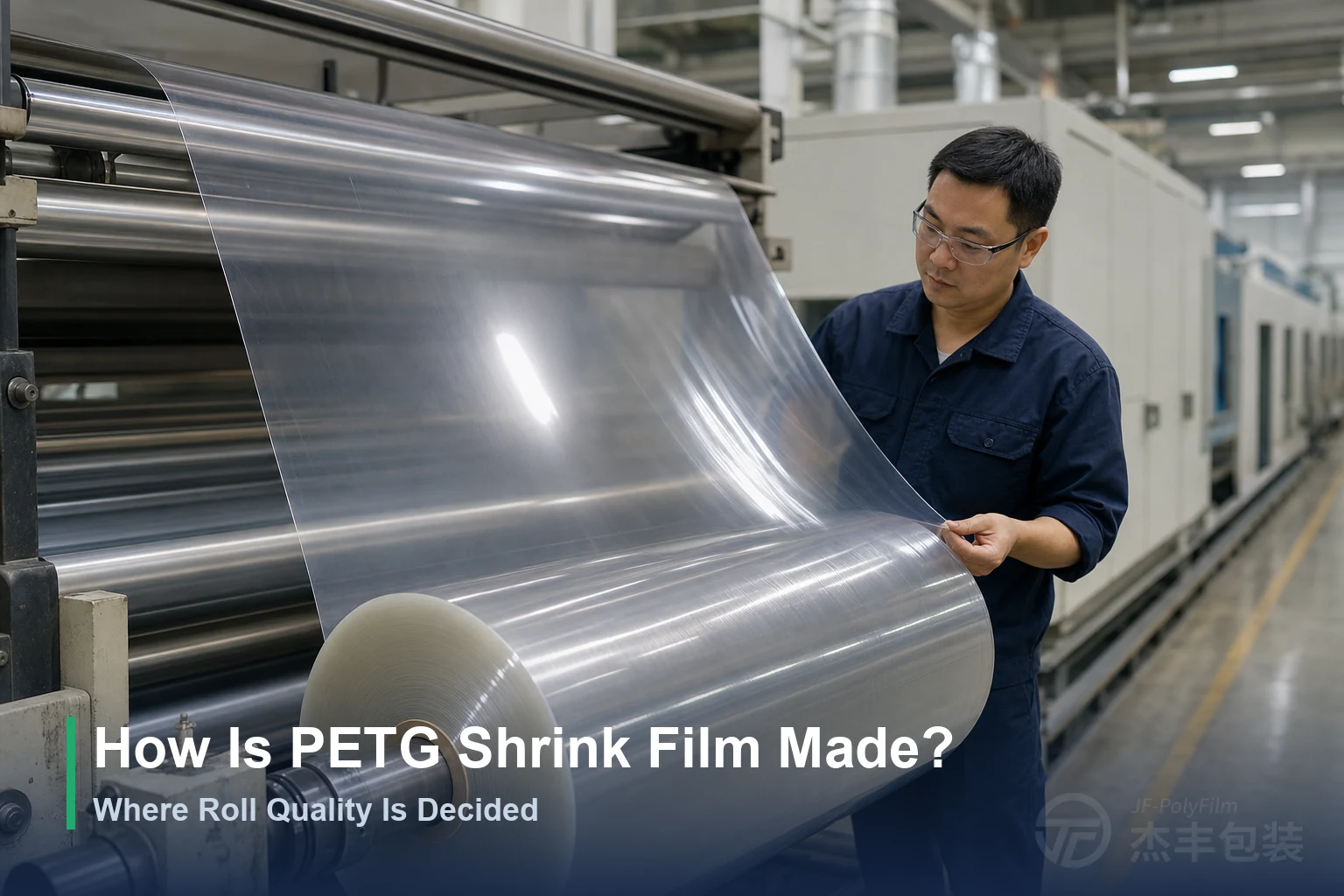
How Is PETG Shrink Film Made? Where Roll Quality Is Decided
How PETG shrink film is made, and which production stage sets each line buyers check on arrival: gauge tolerance, TD/MD shrink, haze, tensile strength, roll labels.
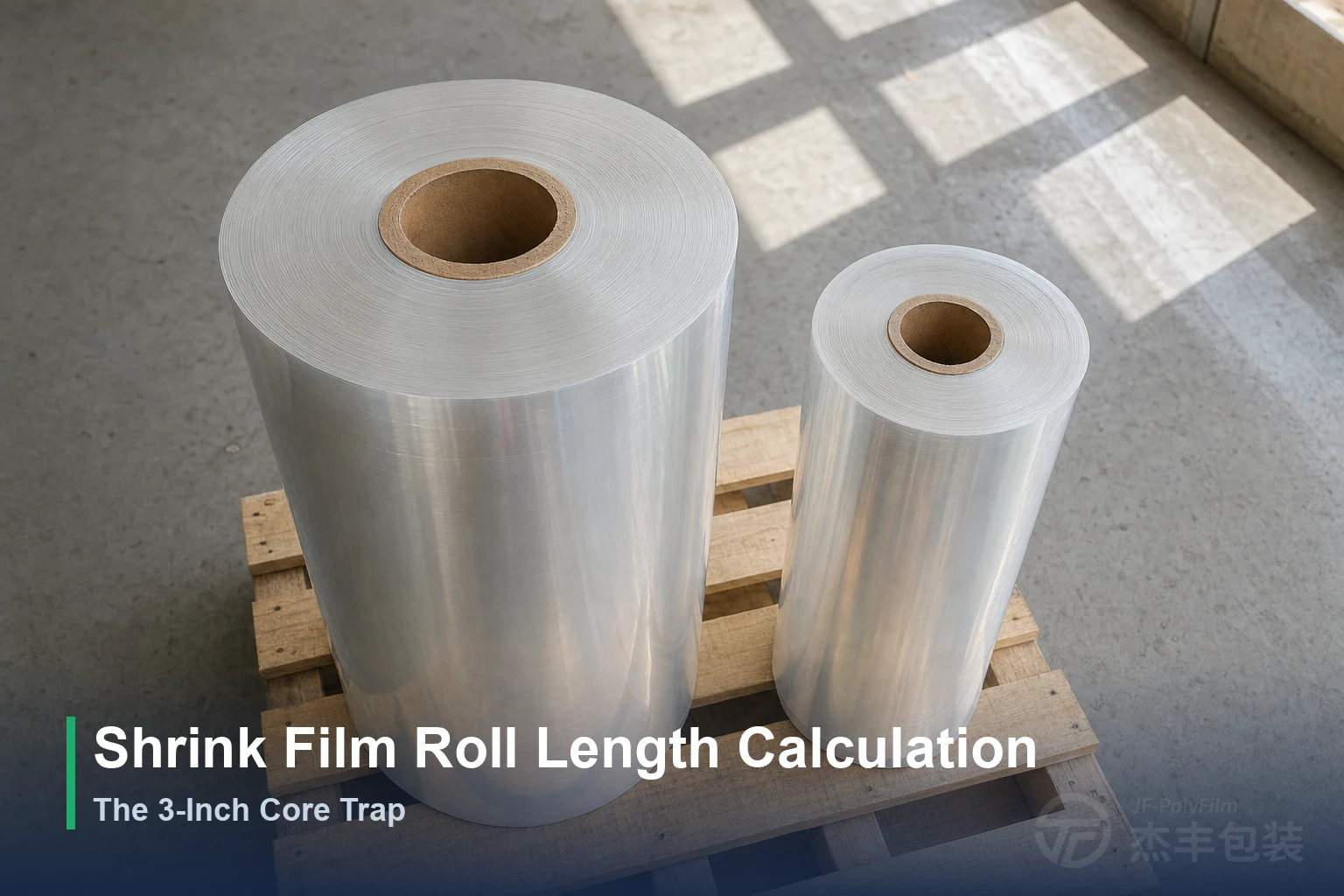
Shrink Film Roll Length Calculation: The 3-Inch Core Trap
Formulas linking roll diameter, length and weight, worked metric and imperial examples, a 30–60 μm diameter table, and why core size and trapped air shift the result.
Need Expert Advice on Shrink Film?
Our technical team can help you choose the right film for your application.
Contact Us