
PETG Shrink Tunnel Temperature: How to Set It Right
Why the tunnel set point is not the film temperature, how steam and hot-air tunnels compare, and how to build a zone-by-zone curve that seats a PETG sleeve cleanly.
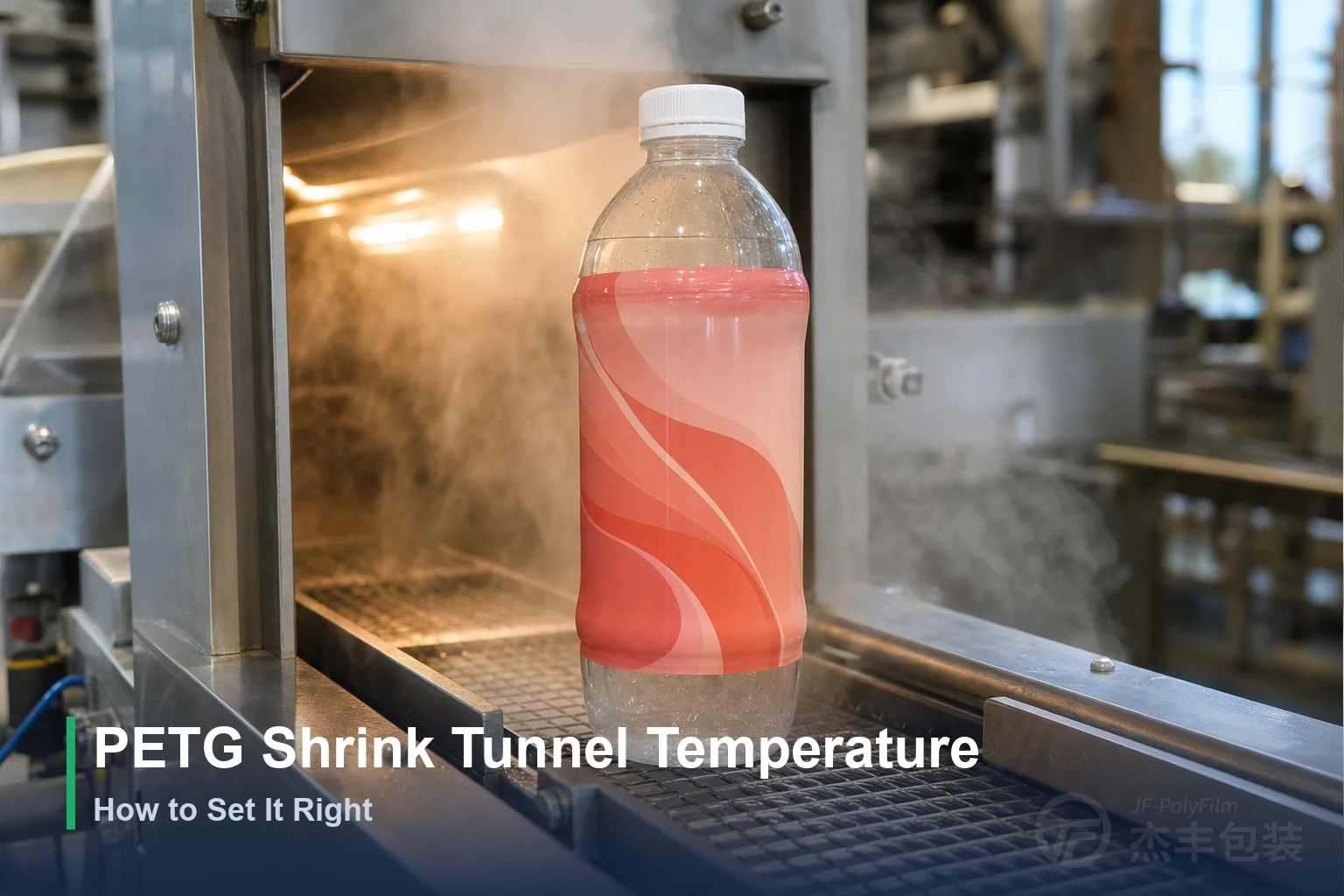
Setting PETG shrink tunnel temperature comes down to one target: driving the film itself to about 95–100°C for a few seconds. The number on the tunnel panel is only a means to that film temperature, and on a hot-air tunnel the two are rarely the same.
Key takeaways
- PETG reaches full shrink when the film itself hits roughly 95–100°C; contraction starts around 65–70°C. Every tunnel setting exists to land the film in that window, not to reach a number on the panel.
- On a hot-air tunnel the air set point runs far higher — commonly 150–260°C, with heating elements hotter still — yet the film and container only reach about 95–100°C. The high air temperature pushes heat in fast; it does not bake the bottle.
- A steam tunnel holds a gentler 80–95°C saturated-steam environment that wraps the sleeve 360°, giving the most even shrink for complex shapes and high-clarity print.
Set point versus film temperature: the number that actually matters
The temperature that decides whether a PETG sleeve shrinks correctly is the temperature the film itself reaches, not the value dialed into the tunnel — and on a hot-air tunnel those two can differ by more than a hundred degrees.
A hot-air tunnel is a different matter: the panel may read 150–260°C, and the heating elements run hotter again, but that is the temperature of the air being blown across the sleeve, not the temperature the film or the container arrives at.
Why heat makes an oriented film contract at all is a materials-science question worked through in how PETG shrink film works; on the line, the only number to chase is the film temperature the settings produce.
Steam or hot air: choosing and setting each tunnel
Steam and hot-air tunnels bring the film into its shrink range by opposite routes, and the choice between them is driven by container shape, print quality, and line speed rather than by a headline temperature.
| Steam tunnel | Hot-air (convection) tunnel | |
|---|---|---|
| Working temperature | Saturated steam ~80–95°C (≈175–200°F) | Air set point ~150–260°C; the film still only reaches ~95–100°C |
| Heat transfer | 360° saturated steam — even and gentle | Directed hot airflow — prone to hot and cold spots |
| Best suited to | Complex or waisted shapes, heat-sensitive contents, high-clarity print, full-body sleeves | Regular shapes, higher line speeds, moisture-free environments |
| Main trade-off | Needs a steam supply and condensate management | Cheaper and compact, but evenness rides on airflow and belt-speed tuning |
Building the temperature curve across zones
An industrial shrink tunnel is not one oven at one temperature; it is a series of independently controlled zones, and setting them as a rising curve rather than a single blast is what lets a sleeve follow a complicated bottle.
Dwell time and line speed
Shrink is a product of temperature and time, so belt speed matters as much as any temperature setting: it fixes how long the sleeve stays in the heat, and that dwell has to be long enough for the film to reach full contraction but no longer. For most sleeves the right dwell is a matter of a few seconds, and it is set by conveyor speed rather than by a clock.
Frequently Asked Questions
What temperature should a shrink tunnel be set to for PETG film?
Steam or hot-air tunnel for PETG shrink sleeves?
How long should PETG stay in the shrink tunnel?
Related Articles
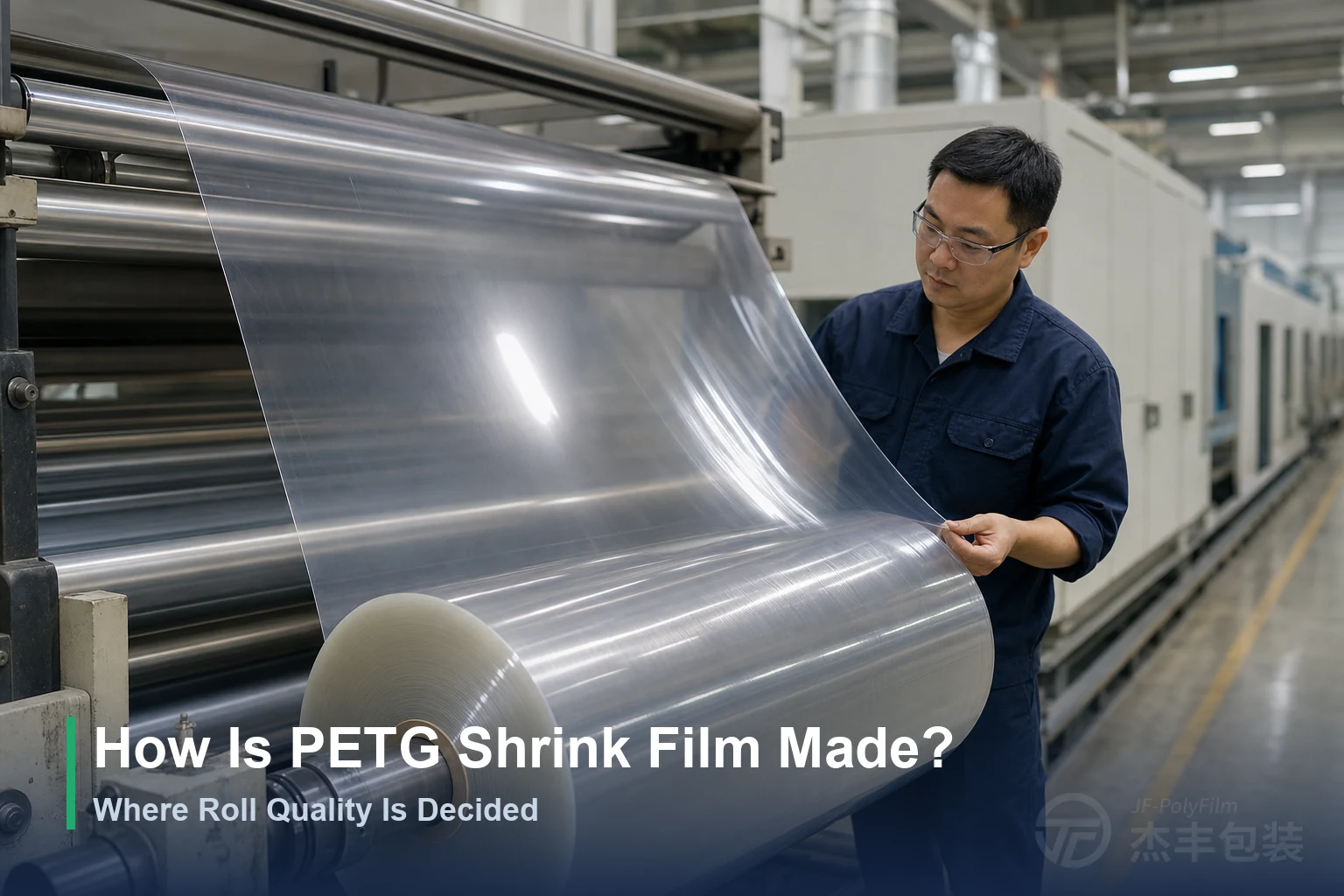
How Is PETG Shrink Film Made? Where Roll Quality Is Decided
How PETG shrink film is made, and which production stage sets each line buyers check on arrival: gauge tolerance, TD/MD shrink, haze, tensile strength, roll labels.
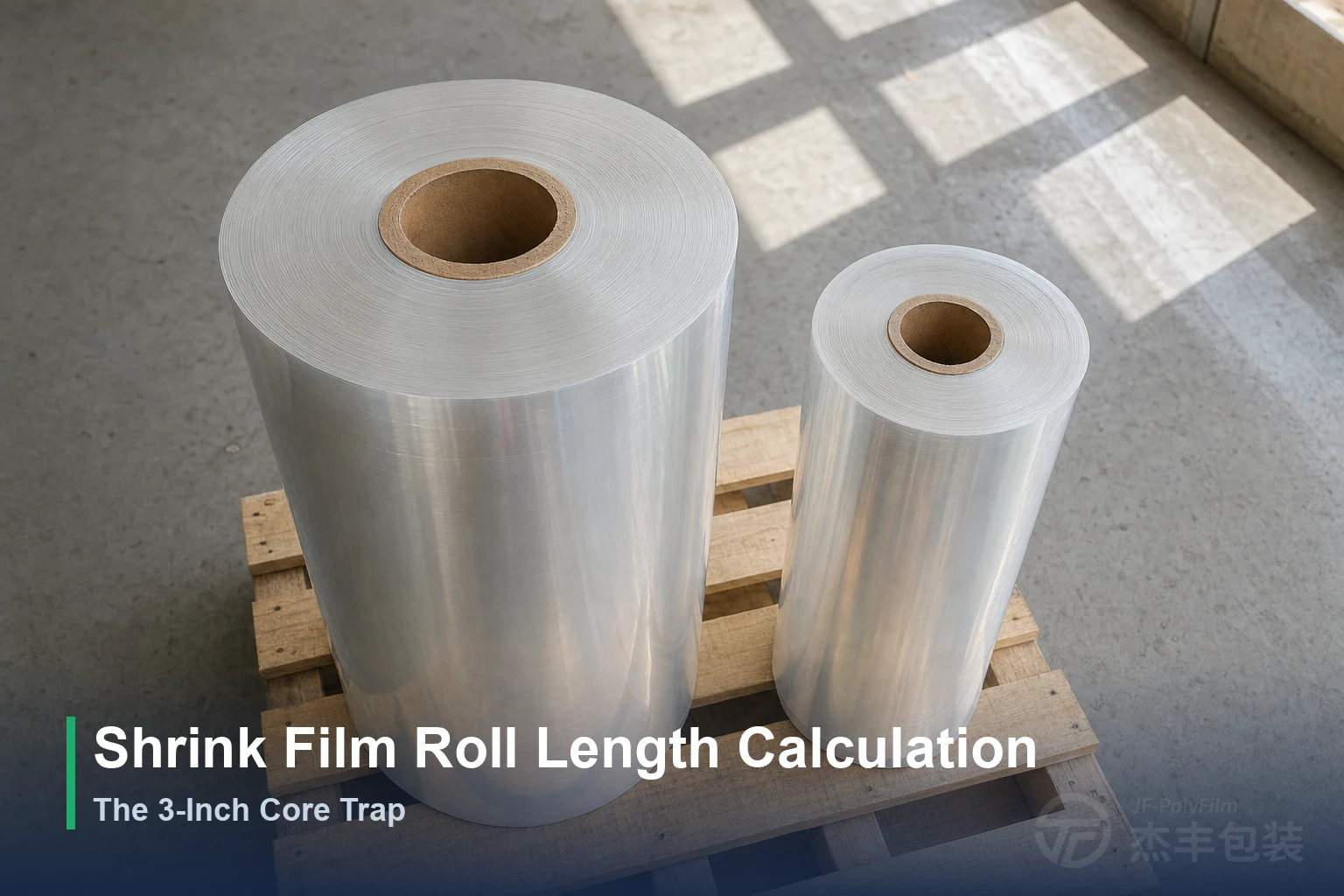
Shrink Film Roll Length Calculation: The 3-Inch Core Trap
Formulas linking roll diameter, length and weight, worked metric and imperial examples, a 30–60 μm diameter table, and why core size and trapped air shift the result.
Need Expert Advice on Shrink Film?
Our technical team can help you choose the right film for your application.
Contact Us