
Shrink Bands vs Shrink Sleeves: Neck Seal or Full Wrap
Choosing between a tamper-only neck band and a full-body shrink sleeve — what each format covers, the film and converting behind them, and when one film does both jobs.
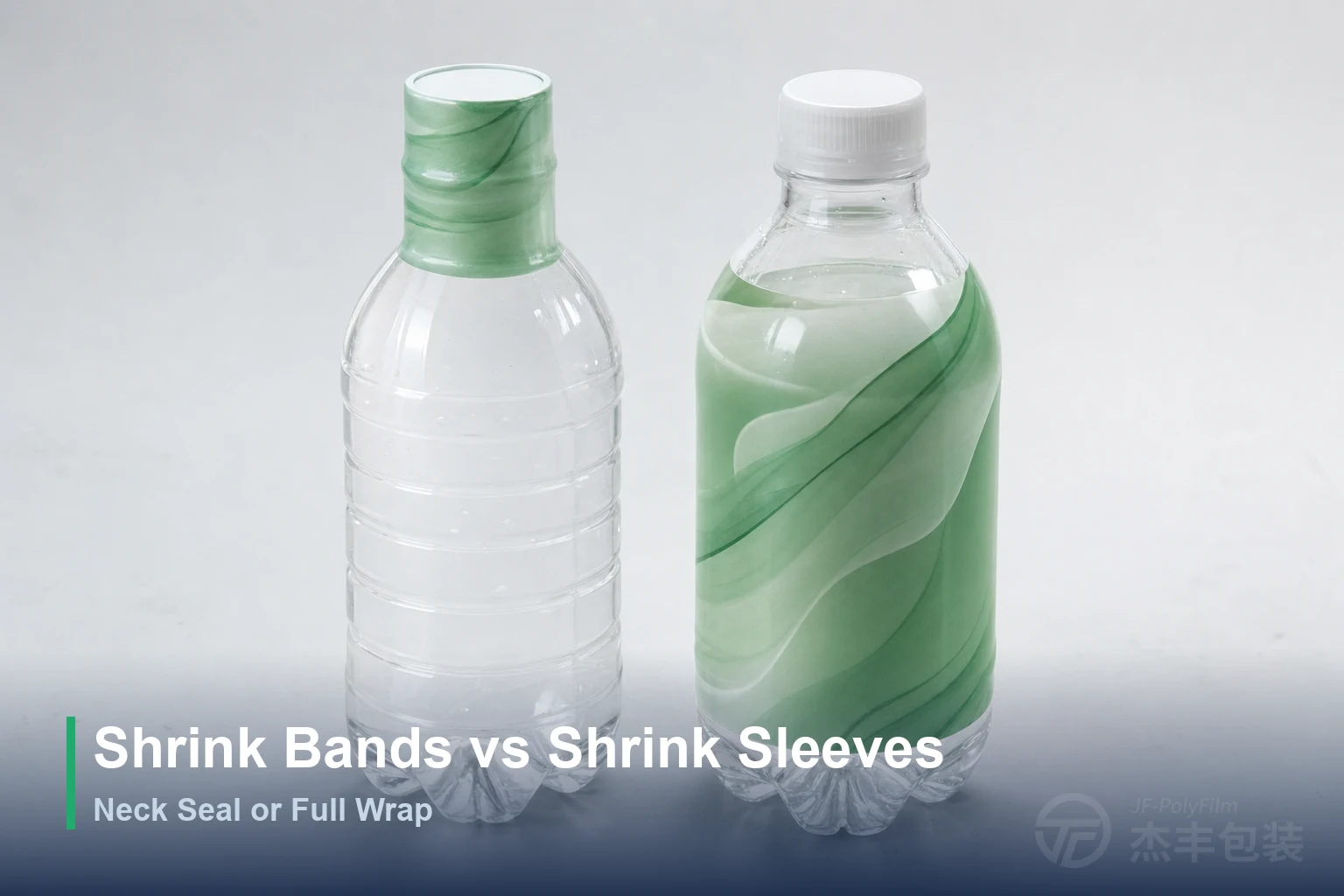
A shrink band and a full-body shrink sleeve are the same heat-shrink film cut to two sizes — a short ring over the cap-and-neck joint that proves tampering, versus a full wrap that carries 360° graphics down the whole container. The choice between them is a packaging decision, not a material one, and it turns on a single question: does the pack need a seal, a brand face, or both.
Key takeaways
- A band’s job is tamper evidence at the closure; a full-body sleeve’s job is 360° branding, and a sleeve can also prove tampering when it is extended up over the cap.
- Both formats can be cut from the same PETG stock, though neck bands have traditionally been mostly PVC; PETG holds transverse shrink of 75% or more for a tight draw over necks and contours and is a growing share of band volume where recyclability matters.
What each format covers
The split between the two formats is coverage: a band seals a small zone, a sleeve dresses the whole bottle.
The mechanics of how a band tears, and how to match one to a specific closure, are their own subject, set out in the tamper-evident shrink bands guide; the point here is scope.
How a sleeve is formed as a tube and shrunk onto a shape is covered in what a shrink sleeve label is.
Shrink band vs full-body sleeve: the comparison
| Dimension | Shrink band | Full-body sleeve |
|---|---|---|
| Coverage | Cap-and-neck junction only | Shoulder to base, full height |
| Primary job | Tamper evidence (can carry a small logo) | 360° brand graphics; can add tamper evidence over the cap |
| Film used | A fraction of the container — leaner | The whole container — more film per unit |
| Existing label | Left in place | Replaced; the sleeve becomes the label |
| Application | Cut to short rings, banded over the cap, shrunk in a tunnel | Formed into full-height tubes, sleeved over the body, shrunk in a steam or hot-air tunnel |
| Print real estate | Narrow strip — logo, symbol, code, safety line | Full face — complex full-colour design plus product and regulatory copy |
| Container fit | Needs a defined neck to grip | Conforms to tapered, waisted, and irregular shapes |
Film use and converting: where the difference sits
A band is the leaner format because it commits far less film and usually leaves the rest of the pack alone. A full-body sleeve works the other way — it dresses the entire surface, which is more film and a larger printed area, and in exchange it delivers the complete brand face in one piece.
When a band is enough, and when a sleeve is the answer
The decision reduces to what the pack actually needs: a band when the job is tamper evidence, a sleeve when the job is the brand.
| The pack needs… | Format that fits |
|---|---|
| Only tamper evidence, existing label stays | Shrink band |
| A light logo or code plus a seal | Printed shrink band |
| Full 360° branding, no tamper requirement | Full-body sleeve |
| Full branding and a tamper seal in one piece | Full-body sleeve extended over the cap |
When the two formats stack
The formats are not mutually exclusive — a full-body sleeve can quietly absorb the band’s whole job. Draw the sleeve up over the closure and add a horizontal perforation, and the wrap that carries the brand also becomes the tamper seal, folding two functions into one film for little extra material.
Frequently Asked Questions
Which costs less to run, a neck band or a full-body sleeve?
Does a shrink band replace a bottle's main label?
Are shrink bands and shrink sleeves made from different film?
Related Articles

How Is PETG Shrink Film Made? Where Roll Quality Is Decided
How PETG shrink film is made, and which production stage sets each line buyers check on arrival: gauge tolerance, TD/MD shrink, haze, tensile strength, roll labels.
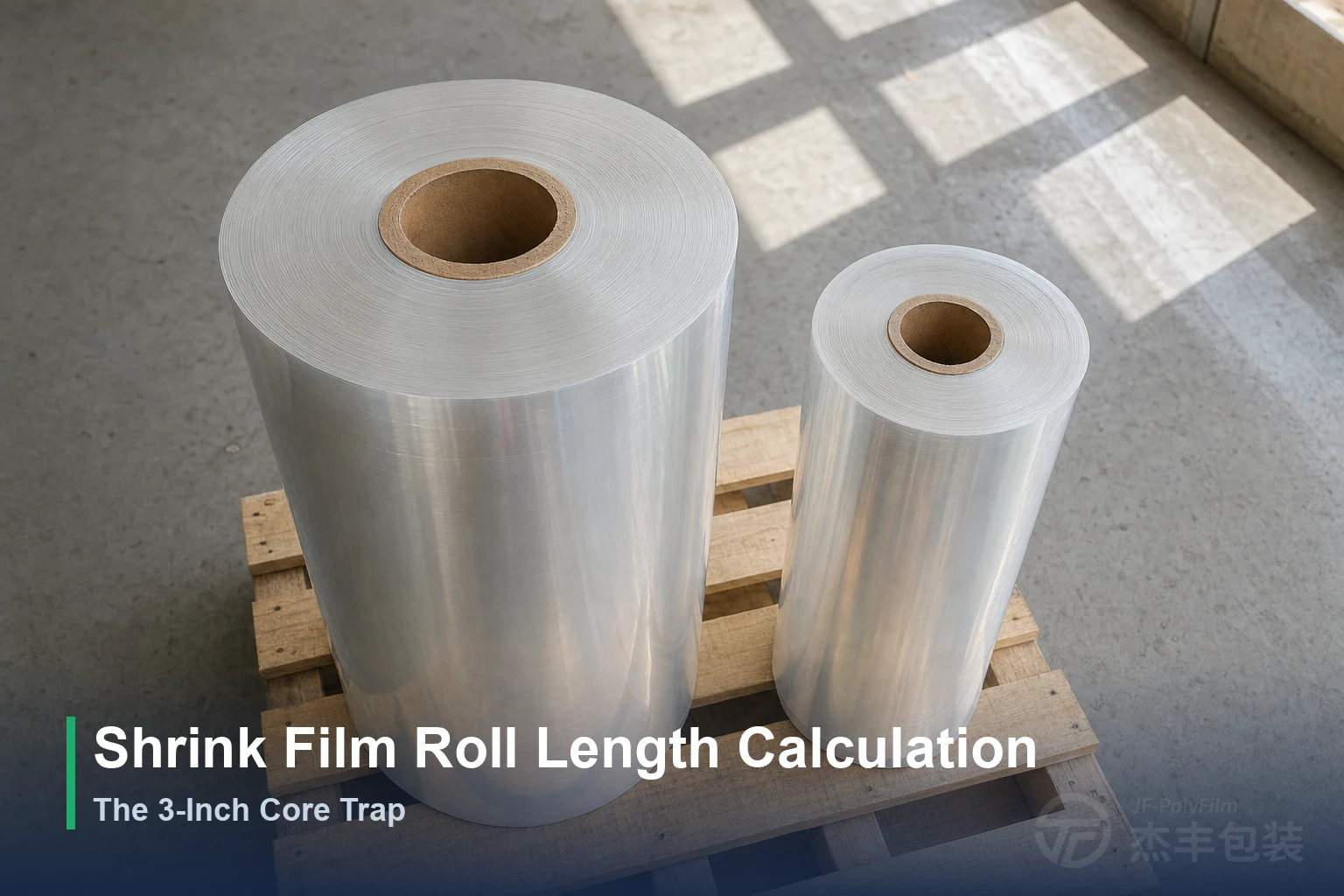
Shrink Film Roll Length Calculation: The 3-Inch Core Trap
Formulas linking roll diameter, length and weight, worked metric and imperial examples, a 30–60 μm diameter table, and why core size and trapped air shift the result.
Need Expert Advice on Shrink Film?
Our technical team can help you choose the right film for your application.
Contact Us