
Shrink Sleeve vs In-Mold Label: Which Fits Your Container
How in-mold labels and shrink sleeves differ on the containers they fit, tooling and volume economics, mono-material recycling, and shelf durability — and which decoration route suits your pack.
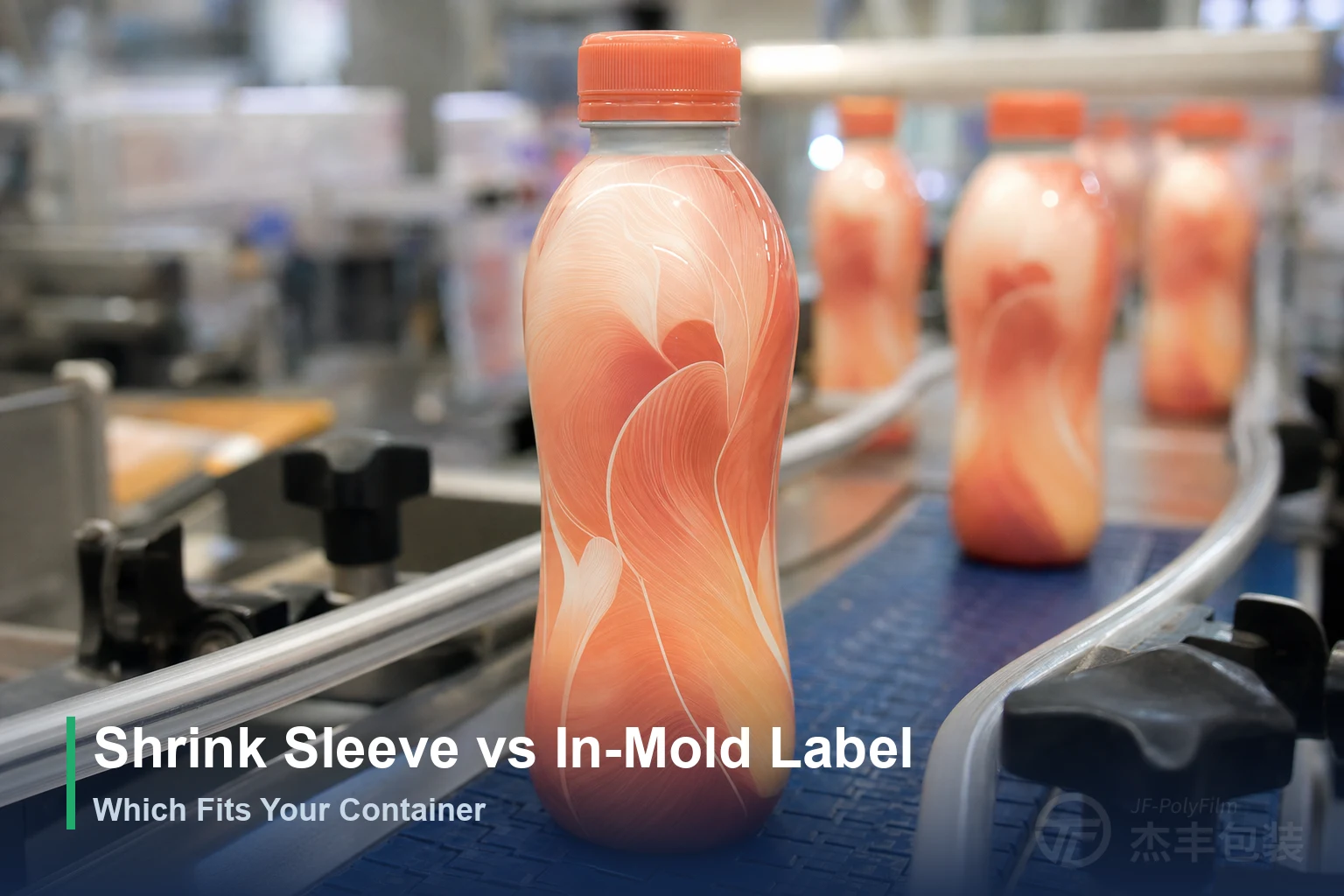
A shrink sleeve is a pre-printed film tube slipped over a finished container and drawn tight to its contour under heat; an in-mold label is a pre-printed film set inside the mold and fused into the container wall as the container itself is formed. The gap between wrapped afterward and formed together drives almost every other difference between them.
Key takeaways
- The dividing line is when and where the graphic meets the container: an in-mold label becomes part of the wall during molding, while a shrink sleeve wraps a container that already exists.
- In-mold labeling only decorates plastic containers molded in-house — glass, metal, and any pre-formed container are out of reach, which is exactly the ground a shrink sleeve owns.
- Recycling can favor a matched in-mold label: a polypropylene label in a polypropylene container is a single material. A PETG sleeve reads as a different material over a PET bottle unless a crystallizable PET film keeps it in the bottle’s stream.
The two methods at a glance
| Axis | Full-body shrink sleeve | In-mold label (IML) |
|---|---|---|
| When decoration happens | After the container is formed and filled | During molding, as the container is formed |
| Container types | Any finished container — plastic, glass, metal | Only plastic containers molded in-house |
| Container shape | Tapered, waisted, oval, deeply contoured | Developable, moldable faces; rounded corners |
| Cost profile | Light tooling, flexible on short runs and many SKUs | High mold and robotics outlay; needs long runs |
| Recycling | Cross-polymer unless a CPET film matches the bottle | Mono-material when label resin matches container |
| Durability | Film graphic conforms but can scuff | Fused into the wall; will not lift or scuff |
The film chemistry behind the sleeve side sits in the PETG versus PVC comparison, and what a sleeve is and how it is built is covered in the shrink sleeve primer.
When the graphic meets the container
The decisive difference is timing: an in-mold label becomes part of the container while the container is being made, whereas a shrink sleeve decorates a container that already exists. One method builds the graphic in; the other applies it on.
Which containers each can decorate at all
An in-mold label can only go onto a plastic container molded in-house, because the label has to sit inside that mold when the container forms — glass, metal, and any pre-formed container that arrives already made are simply out of reach.
Volume, tooling, and where the cost sits
The deciding number is never the lowest unit price in isolation but the total fixed cost spread across the run length and SKU count actually produced — which is why sleeves suit brands whose graphics or container mix move often, and in-mold labeling suits one high-volume container held steady for years.
Recycling: mono-material label vs matched-polymer sleeve
When the label and the container share a single polymer — the common case of a polypropylene label molded into a polypropylene container — the finished pack is mono-material, and recycler associations treat a compatible-polymer in-mold label as a preferred decoration for PP and HDPE precisely because the whole package reduces to one material with nothing to separate. A crystallizable PET (CPET) sleeve shares the bottle’s chemistry and survives the wash, so label and bottle stay together in the RIC 1 PET stream and are recovered as one.
Frequently Asked Questions
Can in-mold labels be applied to glass or metal containers?
Which is cheaper for a short or first production run — shrink sleeve or in-mold label?
Is an in-mold label more recyclable than a shrink sleeve?
Related Articles
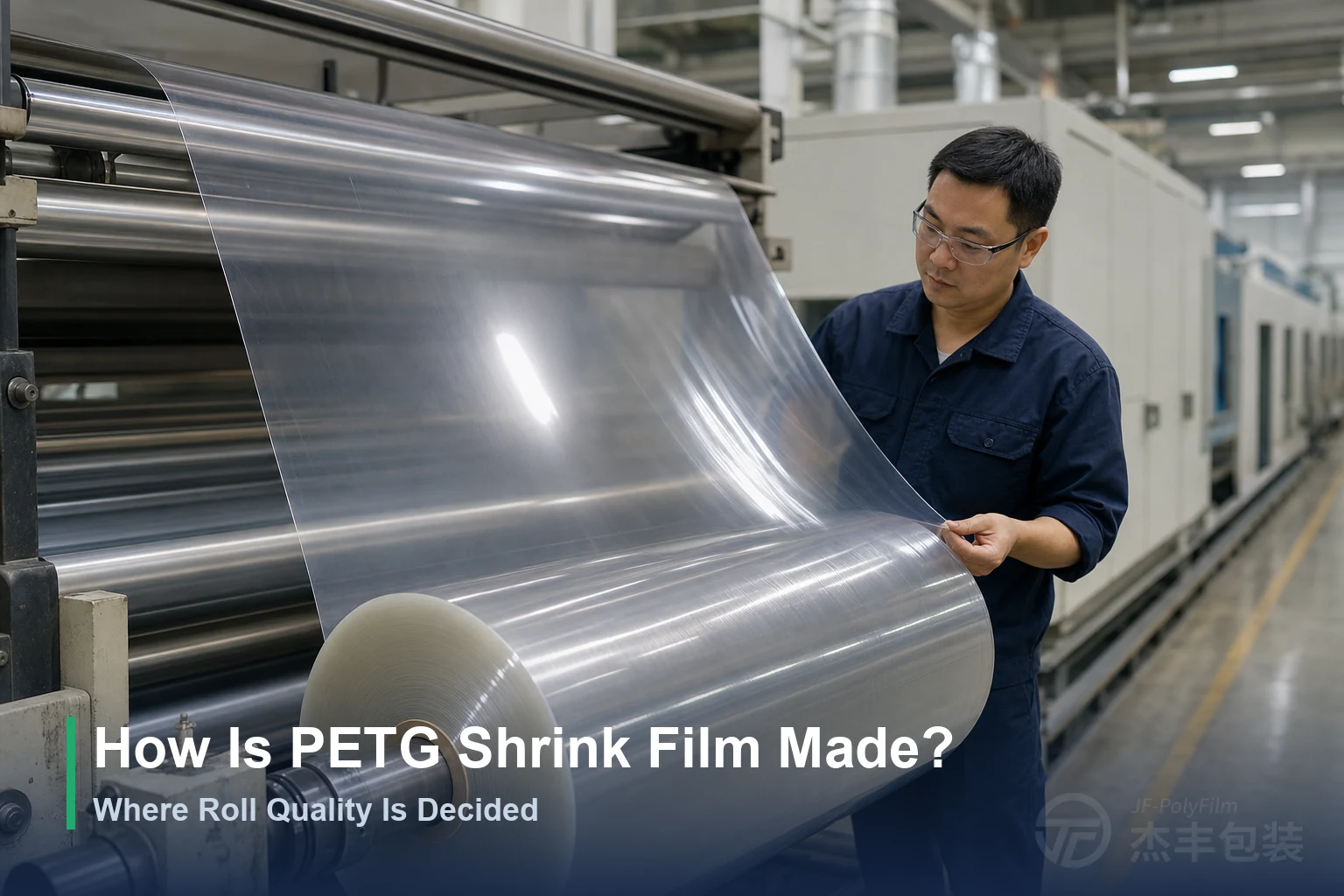
How Is PETG Shrink Film Made? Where Roll Quality Is Decided
How PETG shrink film is made, and which production stage sets each line buyers check on arrival: gauge tolerance, TD/MD shrink, haze, tensile strength, roll labels.
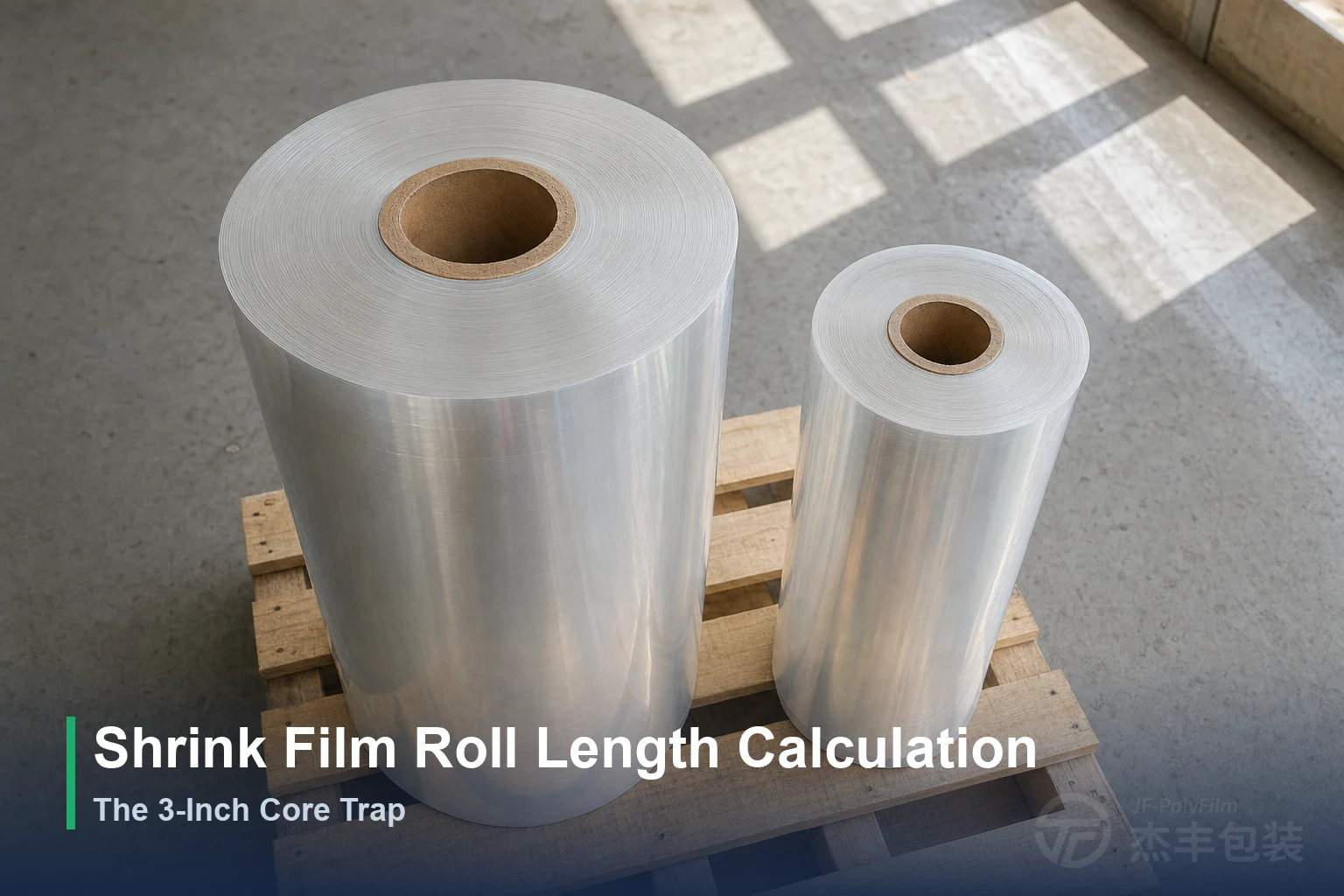
Shrink Film Roll Length Calculation: The 3-Inch Core Trap
Formulas linking roll diameter, length and weight, worked metric and imperial examples, a 30–60 μm diameter table, and why core size and trapped air shift the result.
Need Expert Advice on Shrink Film?
Our technical team can help you choose the right film for your application.
Contact Us