
PETG vs PE Shrink Film: Sleeve vs Bundle
How PETG sleeve film and PE bundling film differ by packaging layer, polymer family, gauge, surface energy, clarity and recycling stream — and which job each is built for.
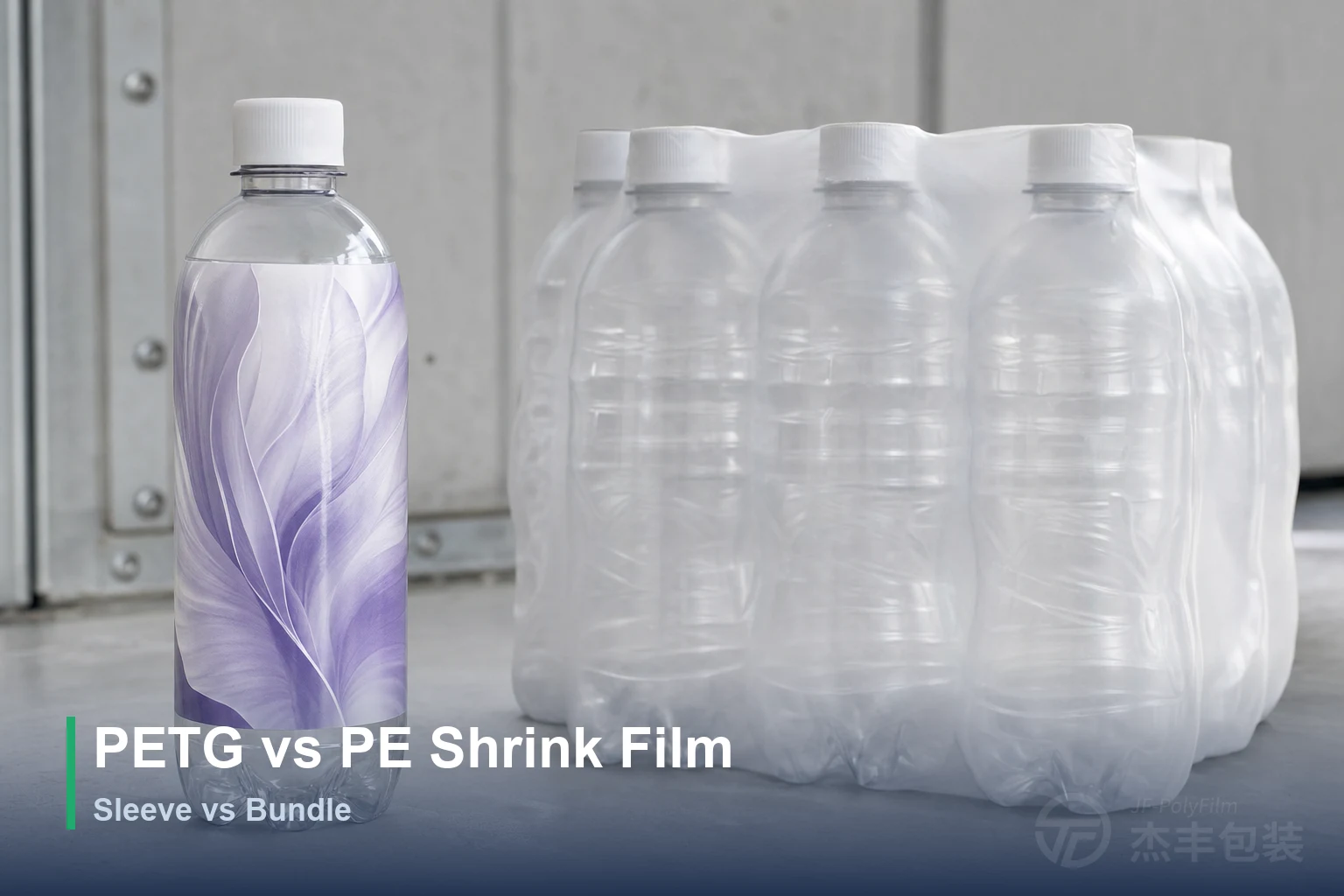
“Shrink film” is a single phrase covering two jobs that share almost nothing. PETG shrink film is a printed polyester sleeve that wraps one container 360° — the glass-clear, decorated label a shopper sees on the shelf. PE (polyethylene) shrink film is a transit material that bundles several units into a multipack or shrouds a full case or pallet for shipping. One film decorates a single unit; the other holds many together for the trip through distribution.
Primary decoration versus secondary packaging
A PETG sleeve is a primary-decoration film — it is the branded surface on one bottle, jar, or can. A PE shrink film is a secondary and transport film — it collates several units into a saleable multipack, or shrouds a case or pallet so the load arrives intact.
Polyethylene is not a polyester
PE and PETG are not variants of one chemistry — they belong to different polymer families, and that is the root of every difference that follows.
Polyethylene carries resin identification code 4 (LDPE) or 2 (HDPE) and belongs to a polyolefin recycling stream entirely its own, separate from the RIC 1 PET stream a PETG sleeve rides with.
PETG vs PE side by side
| Dimension | PETG shrink film | PE shrink film |
|---|---|---|
| Polymer family | Glycol-modified PET copolyester (polyester) | Polyethylene (polyolefin, LDPE/LLDPE) |
| Packaging layer | Primary — decorates one container | Secondary / transit — bundles units, shrouds cases and pallets |
| Typical job | Printed 360° sleeve label | Multipack collation, case and pallet shrouding |
| Gauge | 30-60 μm | 20-150 μm (heaviest on pallet shrouds) |
| Surface energy / print | High energy, prints directly, no corona | Low, non-polar (~30-34 dynes/cm), needs corona or flame |
| Clarity / gloss | Glass-clear, high gloss | Translucent, hazy |
| Density | ~1.28-1.33 g/cm³ (sinks) | ~0.91-0.94 g/cm³ (floats) |
| Recycling stream | PET family, RIC 1 (CPET grade recovers with the bottle) | RIC 4 (LDPE) / 2 (HDPE), separate stream |
| Cost positioning | Premium display | Economical bundling |
Printing: a low-energy surface against a print-ready one
Polyethylene is non-polar, and its untreated surface energy sits low, around 30-34 dynes/cm, so inks, coatings, and adhesives bead up instead of wetting out and anchoring.
PETG behaves the other way. As a polar polyester it has high inherent surface energy, so the grades supplied here accept gravure, flexographic, and UV-inkjet ink directly, with no corona pre-treatment step and one fewer variable on the press.
Clarity: shelf presentation against transit shrouding
PE is a semicrystalline polyolefin, so it scatters light and reads as translucent and hazy rather than display-clear.
PETG is engineered for the shelf. It finishes glass-clear with a high-gloss surface that keeps printed artwork sharp and makes a transparent “no-label” look workable when a design calls for one.
Cost, POF’s middle ground, and the honest answer
On cost the positioning is stable even though specific prices are not: PE is the economical film for bundling, covering the most area at the lowest material cost across a large transit program, while PETG is the premium film for display.
The companion comparisons take PETG through the other decoration-layer films one at a time: PVC, PLA, OPS, and bottle-resin PET, each judged on the sleeve layer where it genuinely competes.
Frequently Asked Questions
Is PE shrink film used to label a bottle the way a PETG sleeve is?
Why can't PE shrink film carry high-resolution print like a PETG sleeve?
Do PE and PETG shrink films go into the same recycling stream?
Related Articles
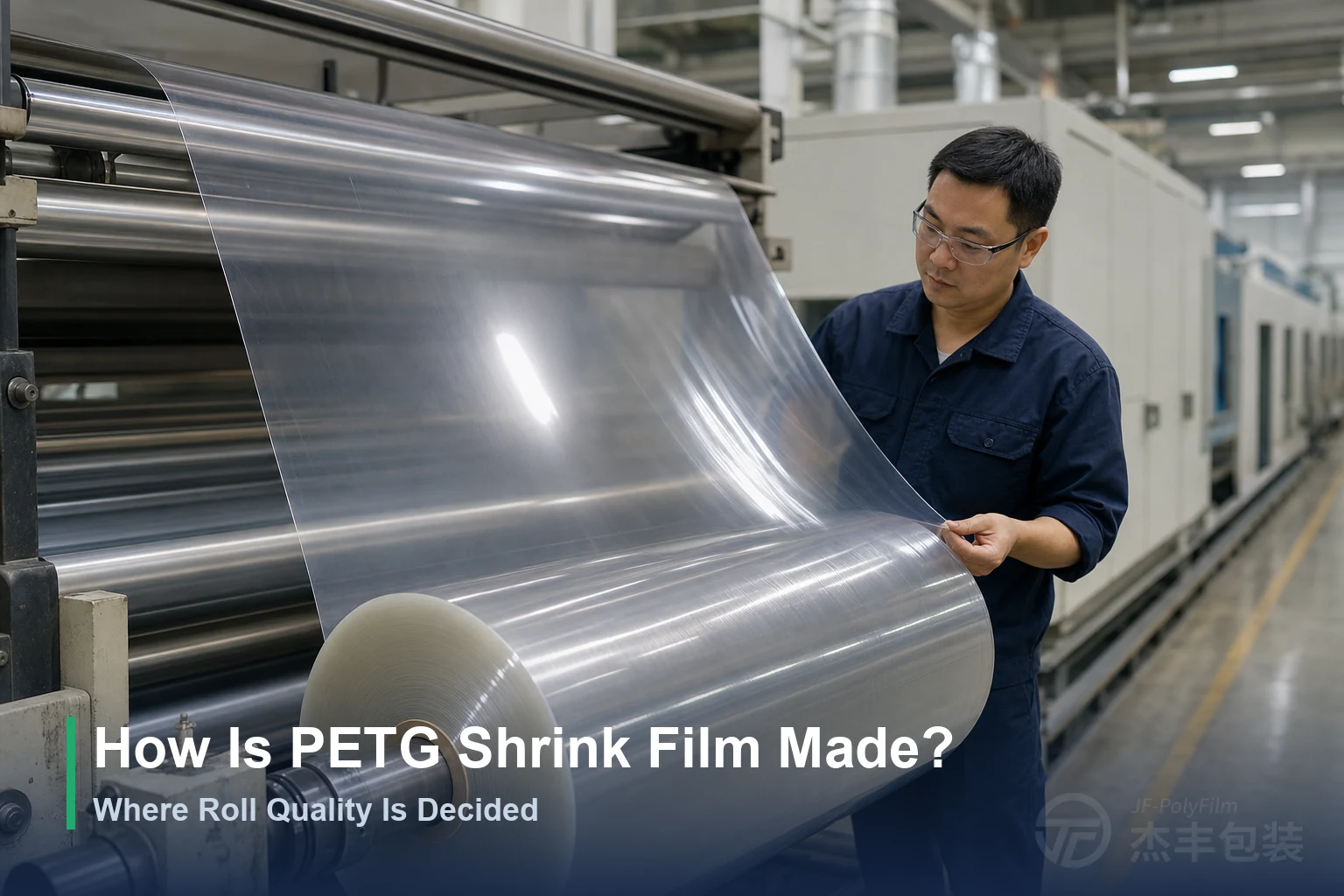
How Is PETG Shrink Film Made? Where Roll Quality Is Decided
How PETG shrink film is made, and which production stage sets each line buyers check on arrival: gauge tolerance, TD/MD shrink, haze, tensile strength, roll labels.
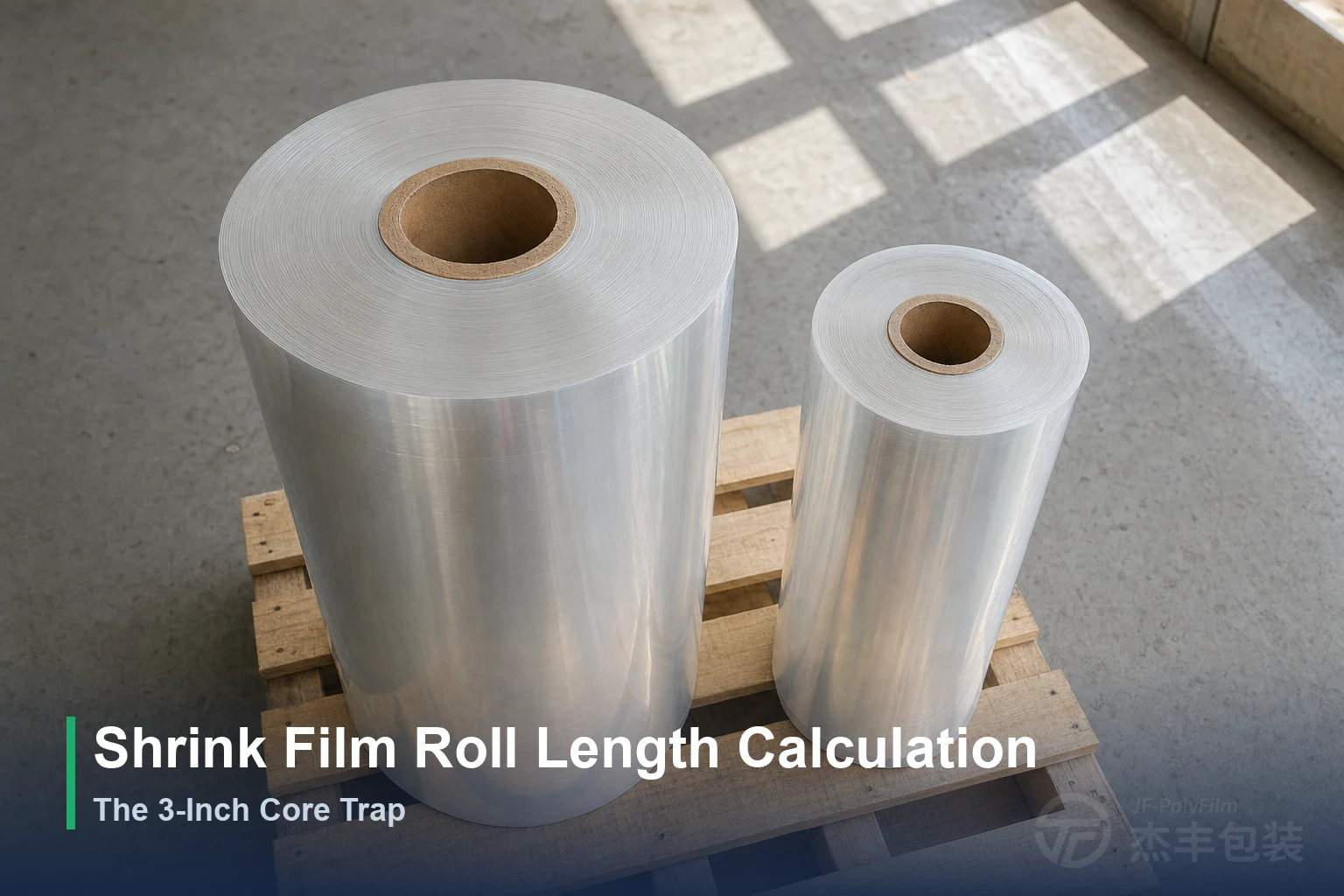
Shrink Film Roll Length Calculation: The 3-Inch Core Trap
Formulas linking roll diameter, length and weight, worked metric and imperial examples, a 30–60 μm diameter table, and why core size and trapped air shift the result.
Need Expert Advice on Shrink Film?
Our technical team can help you choose the right film for your application.
Contact Us